Ashwagandha food supplements: formats, dosage and regulation in France and the EU
Ashwagandha is one of the most requested botanicals among supplement brands, and one of the most closely watched by food safety authorities. Legal status, the ANSES opinion, formats, dosage and labelling: here are the key points, from the R&D team at Irati Production.
Contact us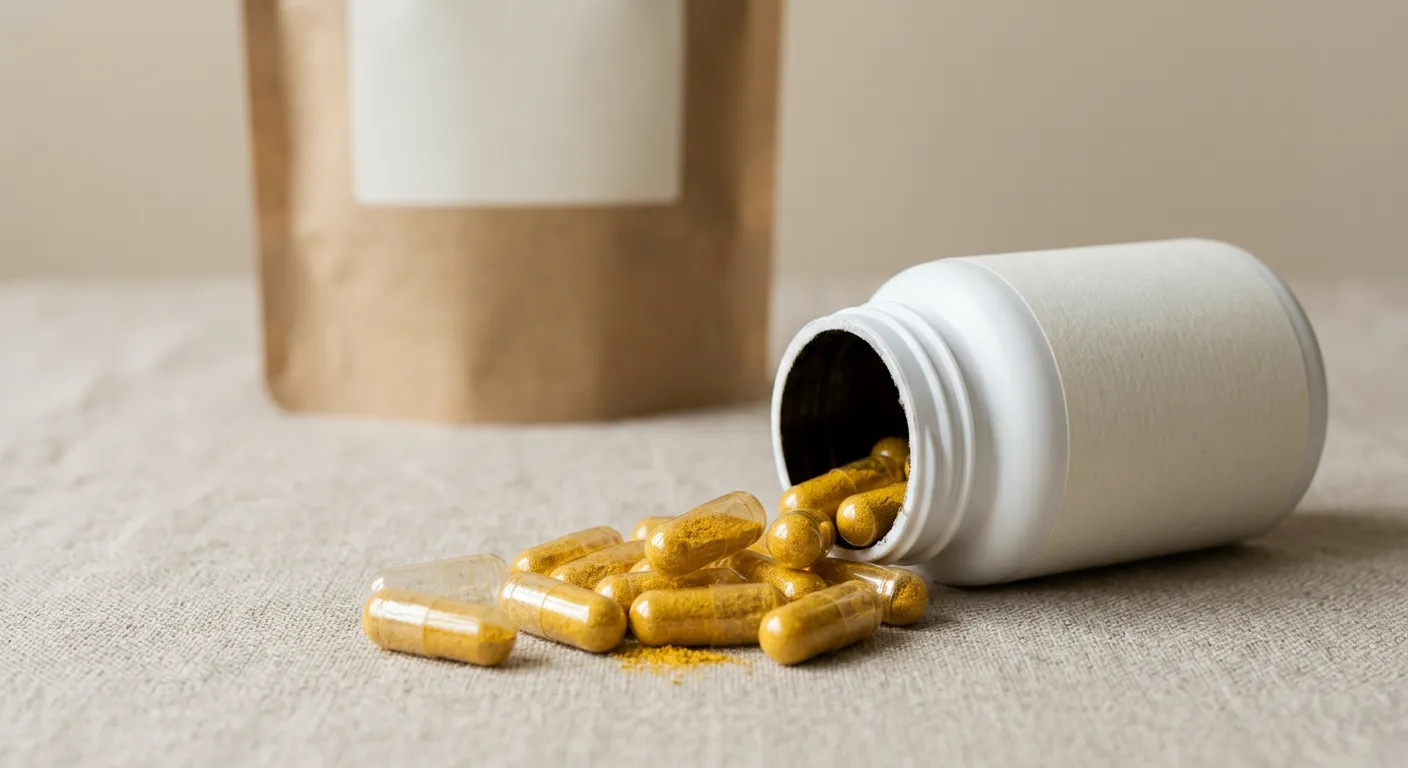
- Ashwagandha (Withania somnifera) can be used in food supplements in France, under conditions.
- In 2024, the French agency ANSES advised several groups, including pregnant women and under-18s, against taking it.
- No health claim is currently authorised for ashwagandha in the European Union.
- The root is the traditionally used part, and the extract must be well characterised.
- Irati Production manufactures ashwagandha formulas as capsules, tablets, powders and pectin-based gummies in Saumur, France.
A popular botanical under close scrutiny
Ashwagandha, or Withania somnifera, is a plant of the Solanaceae family rooted in Ayurvedic tradition. Its root has a long history of use, and its characteristic compounds, withanolides, are used as markers to standardise extracts.
Consumers look for it in stress, relaxation and sleep formulas. For a brand it is a strong ingredient, provided three topics are handled properly: the regulatory status of the plant, the precautions for use and the quality of the extract.
The regulatory framework in France
Food supplements are governed by Directive 2002/46/EC, transposed in France by Decree No. 2006-352. For botanicals, the French order of 24 June 2014 lists the plants permitted in supplements and their conditions of use. Every product must be notified to the DGCCRF, the French authority, through the Compl'Alim online procedure before it goes on sale.
There are two routes. Article 15 of the decree applies when the plant and its conditions of use fall under French rules. Article 16 allows a product lawfully marketed in another EU Member State to be sold in France under mutual recognition. For ashwagandha, we check the applicable route, the plant part and the type of extract with you before any development, as part of our regulatory support.
The ANSES opinion and precautions for use
Following nutrivigilance reports referred by the DGCCRF, ANSES issued an opinion on ashwagandha supplements in April 2024 (request No. 2021-SA-0077). The agency noted adverse effects in animals and humans, possible drug interactions, and insufficient data to set a safe intake level, partly because the extracts studied are poorly characterised.
ANSES advises against these supplements, or calls for caution, for:
- pregnant and breastfeeding women;
- children and teenagers under 18;
- people with endocrine disorders, especially thyroid conditions, or hyperandrogenism;
- people with liver or heart conditions;
- people taking central nervous system depressants.
Across Europe, Denmark banned the plant in food in 2023, and a working group of the Heads of Food Safety Agencies recommended in 2024 that it be assessed under Article 8 of Regulation (EC) No 1925/2006. Brands should display these warnings clearly on the label and in their marketing.
Capsules, tablets, powder or gummies
Ashwagandha is used as root powder or as an extract. The right format depends on the target dose and on your customers.
- Capsules: the reference format, taste-neutral, suited to both root powder and extract. We manufacture size 1, 0 and 00 capsules, plant-based or gelatine.
- Tablets: convenient for combining the extract with minerals and vitamins in a single unit.
- Powder: for drinks, packed in doypacks or stick packs. The bitterness of the root calls for careful flavouring.
- Pectin-based gummies: pleasant to take and gelatine-free. The amount of extract per gummy is limited and the taste must be well masked.
See our pages private label ashwagandha manufacturer and capsule manufacturer.
Dosage and extract quality
There is no harmonised maximum level for ashwagandha in the European Union. The dose is therefore set according to the ingredient used, root powder or extract, and its withanolide content, while taking the ANSES precautions into account.
Raw material quality is decisive. We require a certificate of analysis stating the plant part, the extraction solvent and the standardisation, along with contaminant testing for heavy metals, pesticides and microbiology. The root remains the traditional part; aerial parts call for great caution.
Claims and labelling
Regulation (EC) No 1924/2006 governs claims, and Regulation (EU) No 432/2012 sets out the list of authorised health claims. None is listed for ashwagandha. Most botanical claims are still on hold at EU level, and any transitional use must be assessed case by case. Therapeutic promises are never allowed.
A common approach is to combine ashwagandha with nutrients that carry authorised claims. Magnesium and vitamin B6 contribute to normal psychological function and to the reduction of tiredness and fatigue, provided the daily portion supplies at least 15% of the nutrient reference values.
The label follows Regulation (EU) No 1169/2011 and Decree No. 2006-352: recommended daily portion, a warning not to exceed it, a statement that supplements are not a substitute for a varied diet, and the statement to keep out of reach of young children. We also add the precautions for use drawn from the ANSES opinion.

Your ashwagandha, made in France
Irati Production manufactures your ashwagandha supplements under private label or as custom formulas, in our manufacturing unit in Saumur.
- Extracts and root powders with certificates of analysis
- Size 1, 0 and 00 capsules, plant-based or gelatine
- Tablets, powders and pectin-based gummies
- Compliant labelling with precautions for use
- ISO 22000 and HACCP certified, FDA registered site
Our answers on ashwagandha supplements
Is ashwagandha allowed in food supplements in France?
Yes, it can be used in a food supplement notified to the DGCCRF under Decree No. 2006-352. Irati Production checks the applicable notification route before each project.
Who does ANSES advise against taking ashwagandha?
Pregnant and breastfeeding women, under-18s, people with thyroid disorders, hyperandrogenism, liver or heart conditions, and people taking central nervous system depressants.
Is there an authorised health claim for ashwagandha?
No, Regulation (EU) No 432/2012 contains no authorised claim for ashwagandha. Irati Production suggests combining it with magnesium or vitamin B6, which carry authorised claims.
Can ashwagandha be made into gummies?
Yes. Irati Production manufactures pectin-based, gelatine-free gummies. The amount of extract per gummy is limited and the bitterness of the plant must be masked.
Can I launch an ashwagandha product in a small batch?
Yes, on Irati Production's standard private label formulas. For a custom formula, the quantity depends on the development.
The information in this article is general and does not constitute regulatory advice. Each formula undergoes a technical and regulatory feasibility study.