Chewable tablets: who they suit and how to formulate them
A chewable tablet is taken without water and appeals to people who dislike swallowing capsules. It is also more demanding to formulate than a standard tablet: taste, texture, hardness and labelling all have to work together. Here are the key points from the R&D team at Irati Production.
Contact us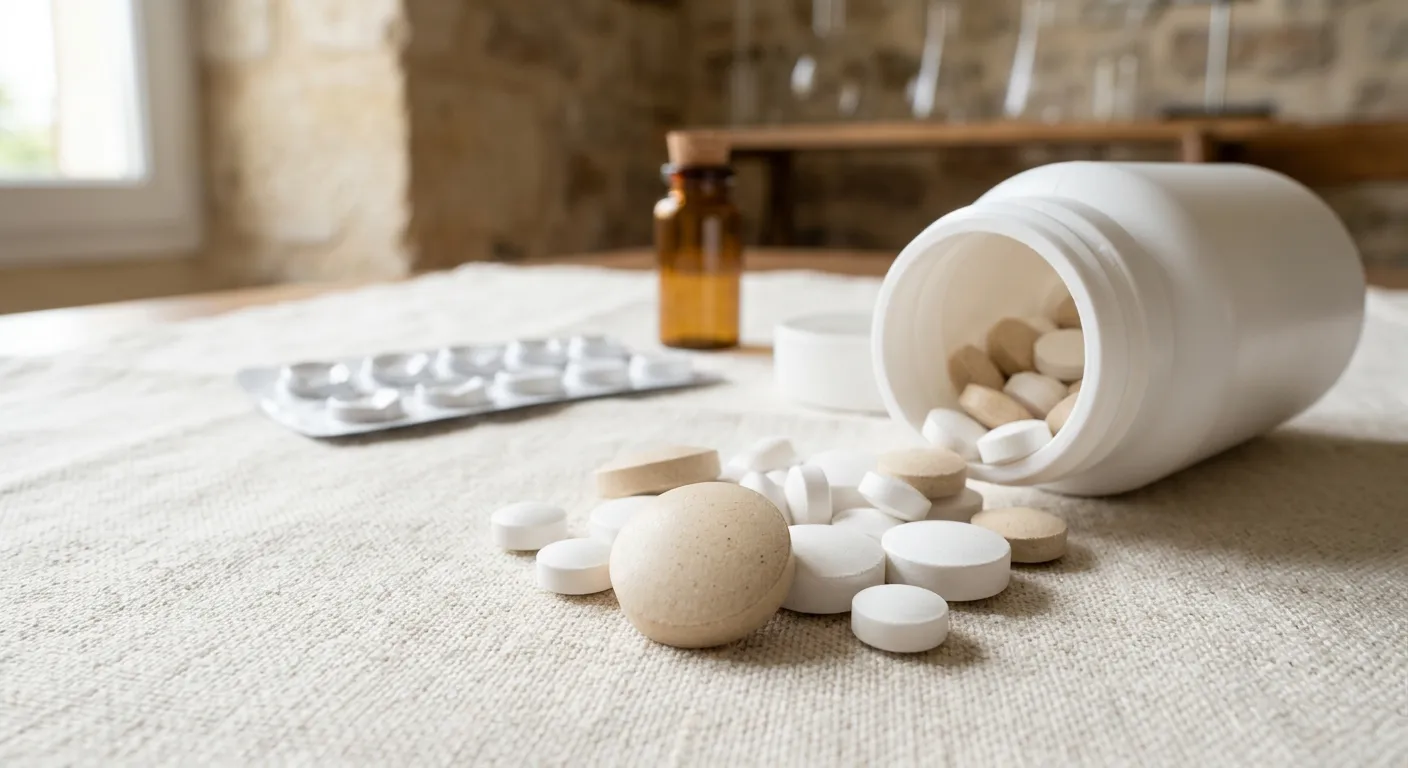
- Directive 2002/46/EC lists tablets among the dose forms allowed for food supplements; the chewable tablet is one variant.
- Taste comes first: flavourings, sweeteners and acidifiers must mask the bitter or metallic notes of the actives.
- Above 10% added polyols, the label must state that excessive consumption may produce laxative effects.
- The tablet must be hard enough to survive packing and transport, yet soft enough to chew easily.
- Irati Production manufactures your tablets, including chewable tablets, at its production unit in Saumur, France.
A dose form in its own right
Directive 2002/46/EC, implemented in France by Decree No. 2006-352, defines food supplements as products marketed in dose form: capsules, pastilles, tablets, sachets of powder and similar forms. The chewable tablet belongs to this group. It is designed to be chewed and then swallowed, which changes how it is formulated.
A standard tablet mainly needs to break down in the stomach. A chewable tablet must also taste good, feel pleasant in the mouth and break easily under the teeth. Sensory criteria therefore belong in the specification from day one, alongside the active content.
Who is a chewable tablet for?
Brands usually choose this format for three groups of consumers:
- Children, from an age the brand sets and justifies in its file. Formula, daily dose and label wording are adapted, and the statement to keep the product out of reach of young children remains mandatory.
- Adults and seniors who find it hard to swallow a whole capsule or tablet.
- On-the-go users, such as athletes or travellers, who want a dose without water at any time of day.
Vitamin C, vitamin D, multivitamins, magnesium and lactic ferments are common chewable formulas. Pectin-based gummies often target the same consumers; the chewable tablet stands apart because it is made without cooking and its sugar content is easier to reduce.
The ingredients of a good formula
In a chewable tablet, excipients make up a large share of the mass. They carry the taste and the texture:
- Fillers: polyols (sorbitol, mannitol, xylitol, isomalt) or sugars such as dextrose. Polyols give a cool mouthfeel and make a "sugar-free" formula possible.
- Flavourings: governed by Regulation (EC) No 1334/2008, with fruity and tangy notes the most popular.
- Sweeteners and acidifiers: authorised under the conditions of Regulation (EC) No 1333/2008, they balance the taste and mask bitterness.
- Processing aids: a lubricant and an anti-caking agent help compression and powder flow.
Some actives are hard to mask: metallic-tasting minerals such as iron or zinc, bitter botanical extracts, B vitamins. In France, botanicals must also appear on the list set by the decree of 24 June 2014. The higher the active dose, the larger the tablet, or the more the daily dose is split across several tablets. This is settled during custom formulation, with bench trials carried out as a paid service.
Compression, hardness and shelf life
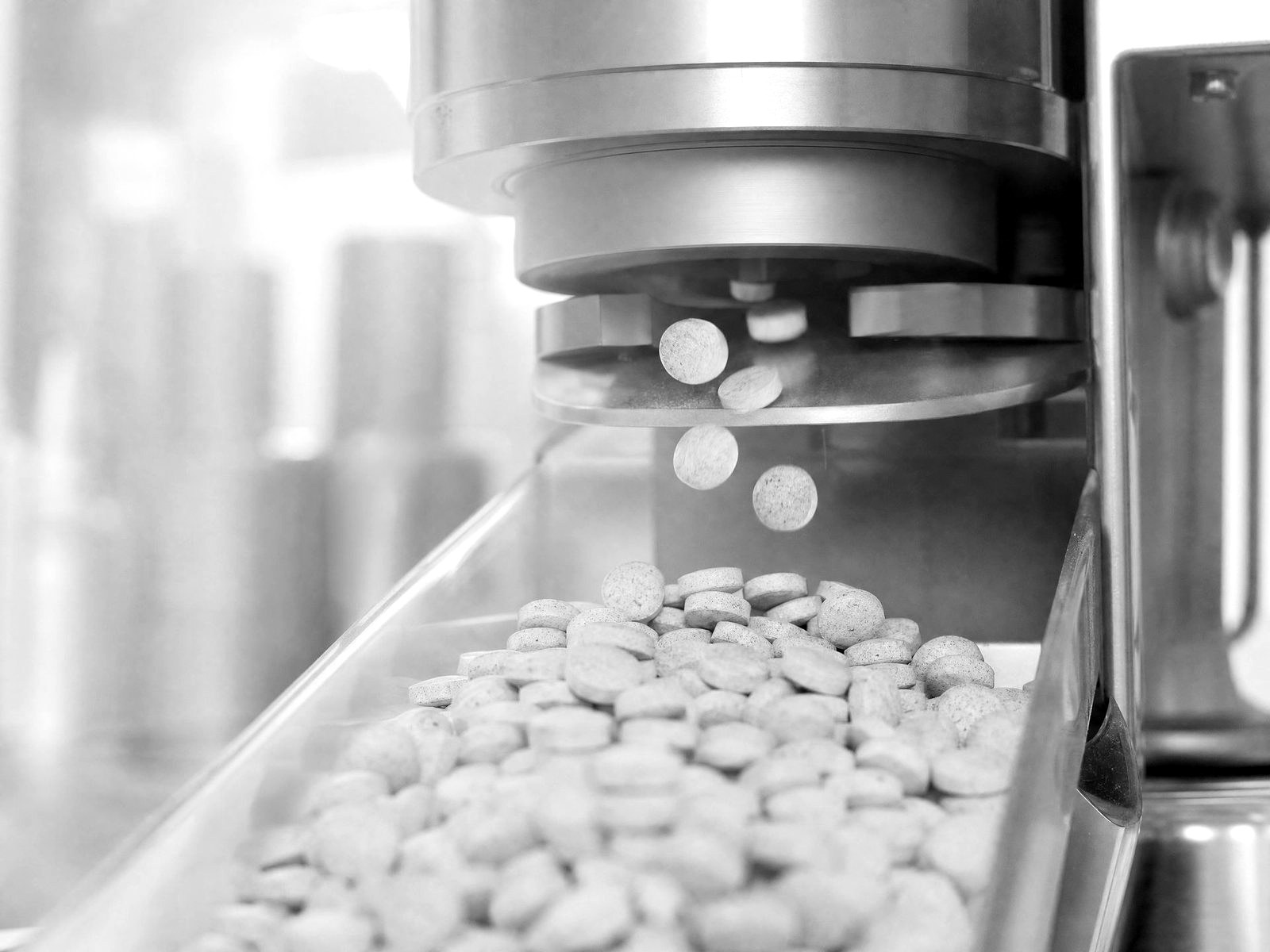
Powders are blended in a mixing room, then compression gives the tablet its shape and hardness. The challenge is balance: too soft and the tablet crumbles in the jar, too hard and it becomes unpleasant to chew. Breaking strength and friability are checked during production, using European Pharmacopoeia methods as the reference.
Many polyols and actives absorb moisture. A tablet that takes up water can soften, stick or change taste, so packaging matters as much as the formula: a tightly closed jar protects better than loose packaging. Our tablets have a 24-month best-before period, confirmed for each formula by stability testing. See all options on our private label tablet manufacturer page.
Labelling and claims
Labelling follows Regulation (EU) No 1169/2011 and, in France, Decree No. 2006-352: the name "food supplement", the recommended daily dose, a warning not to exceed it and the statement to keep out of reach of young children. Two statements are specific to chewable tablets, depending on the formula:
- "Excessive consumption may produce laxative effects", if added polyols exceed 10% of the product.
- "Contains a source of phenylalanine", if the formula contains aspartame.
The nutrition claim "sugar-free" requires no more than 0.5 g of sugars per 100 g under Regulation (EC) No 1924/2006. Health claims come from nutrients: "vitamin C contributes to the normal function of the immune system", if the daily portion provides at least 15% of the reference intake, i.e. 12 mg. Dental claims linked to xylitol carry strict conditions in Regulation (EU) No 432/2012, some of which apply to chewing gum only; they are reviewed case by case through our regulatory support.
Your chewable tablets, made in France
Irati Production manufactures your chewable tablets as private label or custom products at its production unit in Saumur.
- Tablets, including chewable tablets, on 2 tablet presses
- 4 mixing rooms for powder preparation
- Packed in jars
- Standard formulas and custom development
- ISO 22000 and HACCP certified, FDA registered site
Our answers on chewable tablets
Is a chewable tablet a food supplement like any other?
Yes. Tablets are one of the dose forms provided for by Directive 2002/46/EC. Irati Production manufactures chewable tablets that follow the same composition and labelling rules as any food supplement.
Can a chewable tablet be sugar-free?
Yes, using polyols and authorised sweeteners. The "sugar-free" claim requires no more than 0.5 g of sugars per 100 g. Irati Production also checks whether the polyol laxative warning is needed.
Which actives are hard to put in a chewable tablet?
Metallic-tasting minerals, bitter botanical extracts and high-dose actives. Irati Production works on taste masking and tablet size during formulation trials.
Are chewable tablets suitable for children?
They are often chosen for children, from an age the brand defines and justifies. Irati Production adapts the formula, daily dose and label wording to the target consumers.
What is the shelf life of a chewable tablet?
Tablets made by Irati Production have a 24-month best-before period, confirmed for each formula by stability testing. Tight packaging limits moisture uptake.
The information in this article is general and does not constitute regulatory advice. Each formula undergoes a technical and regulatory feasibility study.