Creatine: what 1,596 clinical trials show, and which format to manufacture
Creatine is the most documented sports nutrition supplement in the world. In our PubMed count of 7 November 2026 it has 1,596 human clinical trials, and the market follows: product launches containing creatine grew 62% in one year. Here is what the studies say, what the label may state and which format suits a brand, from the Irati Production R&D team.
Contact us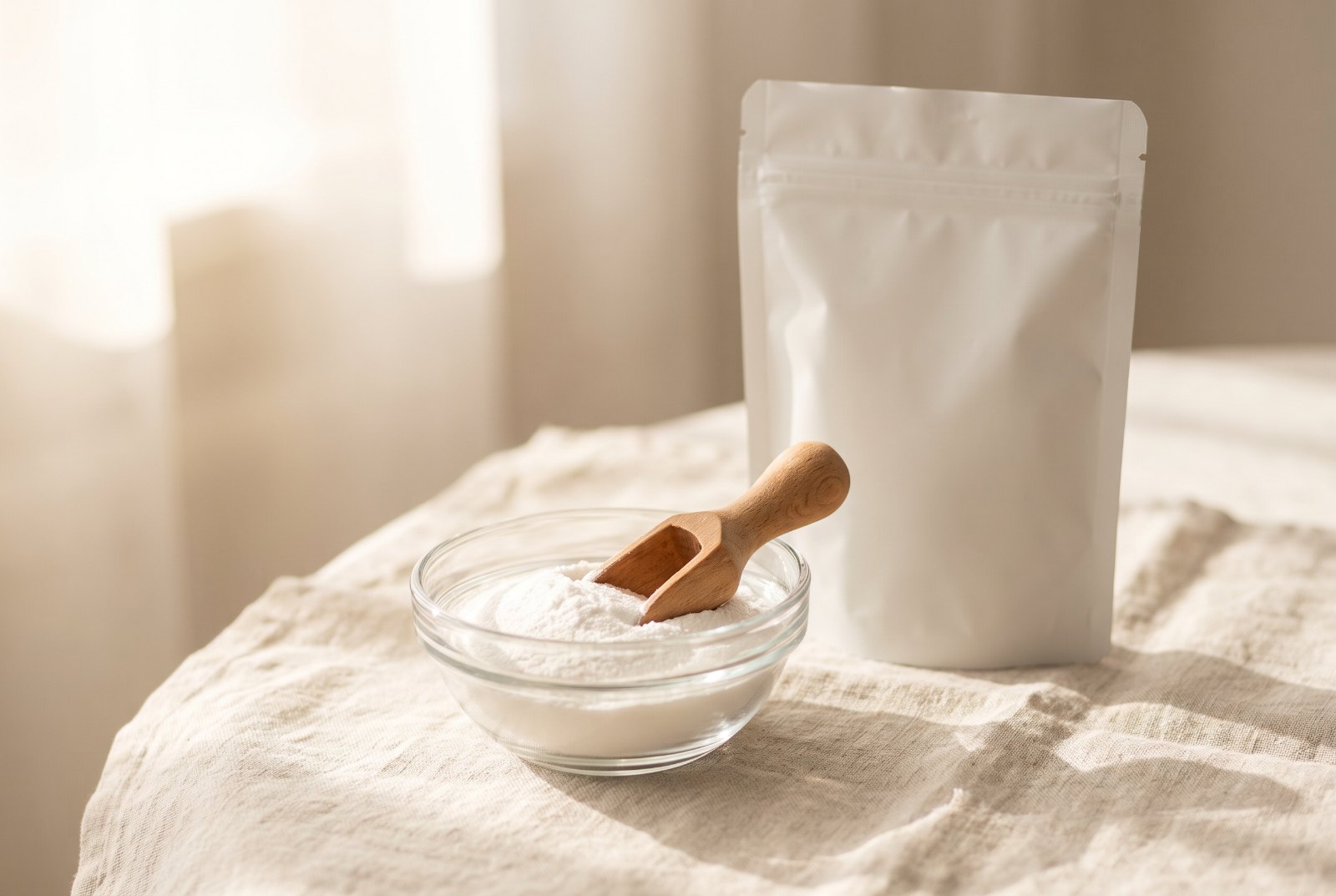
- 1,596 human clinical trials referenced in PubMed since 1970: creatine is the 9th most studied ingredient in our ranking, ahead of whey protein and vitamin B12.
- The consensus dose is 3 g of creatine monohydrate a day, with no mandatory loading phase.
- Two health claims authorised in Europe, under dose conditions: performance in short, intense efforts, and the effect of resistance training in adults over 55.
- Powder in doypacks or stick packs, pectin-based gummies, capsules or tablets: the format depends on the dose and the audience.
- Irati Production manufactures creatine monohydrate in all four formats in Saumur, France, as standard or custom formulas.
Why creatine is the safest ingredient to launch
Few supplement ingredients can rely on such a volume of data. Our count of clinical trials and randomised controlled trials in humans in PubMed, run on 7 November 2026 with the same filters for sixteen ingredients, puts creatine at 1,596 trials, just behind iron (1,604) and melatonin (1,628) and far ahead of whey protein (1,096), collagen (162) or ashwagandha (70). The full method is in our study of the most researched supplements.
This scientific depth has a commercial consequence: creatine is leaving the locker room. In France, the food supplement market exceeds 3 billion euros, and launches of products containing creatine grew 62% year on year according to Innova Market Insights. Women aged 30 to 55, seniors and students are the new audiences, around vitality, preserved muscle mass and focus.

What the studies show, and what they do not
The trials agree on one point: creatine monohydrate increases the muscle's phosphocreatine stores and improves performance in repeated short, intense efforts. The International Society of Sports Nutrition, in its 2017 position stand, describes it as the most effective ergogenic supplement available to increase high-intensity exercise capacity and lean mass during training.
On dose, loading protocols of 20 g a day for five to seven days saturate the muscle faster, but 3 g a day reach the same level in about four weeks with less digestive discomfort. That 3 g dose is the one the European Food Safety Authority retained for the authorised claims.
Studies on cognition, mood or ageing are more recent and smaller. They are promising, but no claim is authorised on these topics: a serious brand keeps them off the label and uses them in its editorial content, with sources.
The two claims the label can carry
Regulation (EU) No 432/2012 and Regulation (EU) 2017/672 authorise two claims for creatine:
- "Creatine increases physical performance in successive bursts of short-term, high intensity exercise", for a product providing 3 g of creatine a day, with the information that the effect is obtained with a daily intake of 3 g.
- "Daily creatine consumption can enhance the effect of resistance training on muscle strength in adults over the age of 55", for 3 g a day, with the information that regular resistance training is needed, at least three times a week for several weeks.
- Nothing else: no "mass gain", no "fat burner", no "memory". Irati Production's regulatory team checks every statement before the first label.
Monohydrate, Creapure, micronised: which one?
Creatine monohydrate is the form used in almost all of the 1,596 trials. Other forms (HCl, ethyl ester, buffered) have not shown superiority and cost more. The useful question for a brand is not the molecule but the quality: raw material origin, purity, particle size.
Micronised creatine disperses better in water, a decisive point for stick packs and doypacks. Branded raw materials such as Creapure bring traceability and a purity argument that some audiences look for. For products aimed at licensed athletes, Cologne List registration is a service Irati Production carries out for the client.
Powder, stick packs, gummies, capsules or tablets: the format follows the dose
At 3 g a day, the format changes everything:
- Powder in doypacks (50 g to 1 kg): the reference format, the most economical per gram, with a scoop. For regular athletes and performance ranges.
- Powder in single-dose stick packs (20, 30 or 40 mm wide): the exact dose, no weighing, for launches, travel and new audiences. Often combined with collagen, electrolytes or magnesium in our standard formulas.
- Pectin-based gummies: the format that wins over women and beginners, with a lower dose per gummy, so several gummies a day to reach 3 g. See our creatine gummies page.
- Capsules and tablets: convenient on the go, but 3 g means several units a day (capsule sizes 1, 0 and 00; tablets up to 2 g). A complementary format rather than the main one.
Launch a creatine under your brand
You can start from one of our standard formulas (pure creatine monohydrate, creatine and collagen stick pack, creatine and electrolytes) or have our R&D team develop a custom formula: flavour, acidulant, combination with other actives. We check the status of every ingredient, write the label with the exact claims and set the taste at the bench trial. See our private label creatine manufacturer page.

Your creatine, made in Saumur, France
Irati Production manufactures creatine monohydrate as powder, stick packs, pectin-based gummies, capsules and tablets in its Saumur unit, ISO 22000 certified, HACCP approach and FDA-registered.
- Creatine monohydrate, micronised or Creapure depending on your positioning
- Doypacks from 50 g to 1 kg, stick packs 20, 30 or 40 mm, pectin-based gummies, capsule sizes 1, 0 and 00
- Small batches available on standard formulas
- Claims checked and compliant label
- Cologne List registration handled for the client
Our answers on creatine
How many studies exist on creatine?
In the PubMed count run by Irati Production on 7 November 2026, creatine has 1,596 clinical trials and randomised controlled trials in humans published since 1970, making it the 9th most studied of the 16 ingredients compared, ahead of whey protein (1,096).
What creatine dose is needed for a health claim?
3 g of creatine a day. That is the dose set by Regulations (EU) No 432/2012 and 2017/672 for the two authorised claims: increased physical performance in short, high-intensity efforts, and enhanced effect of resistance training in adults over 55.
Is a loading phase necessary?
No. Loading at 20 g a day for five to seven days saturates the muscle faster, but 3 g a day gives the same result in about four weeks with better digestive tolerance. Most brands choose 3 g.
Which form of creatine is the most studied?
Creatine monohydrate, used in almost all clinical trials. Other forms (HCl, ethyl ester, buffered) have not shown superiority. Irati Production manufactures creatine monohydrate, micronised or Creapure depending on the project.
Can creatine be made as gummies?
Yes. Irati Production manufactures pectin-based, gelatin-free creatine gummies in Saumur, France. The dose per gummy is lower than in powder: several gummies a day are needed to reach 3 g.
Who manufactures private label creatine in France?
Irati Production manufactures private label creatine in its Saumur unit, as powder (doypack or stick packs), pectin-based gummies, capsules and tablets, on standard or custom formulas, with small batches available on standard formulas.
The information in this article is general and does not constitute regulatory advice. Each formula undergoes a technical and regulatory feasibility study.