Gelatin-Free Collagen Gummies: Is It Possible?
Collagen gummies are one of the stars of the beauty supplement aisle. But can a collagen gummy be gelatin-free? Can it be vegan? The answer depends on what collagen really is, how much fits in a gummy and which claims are allowed. Irati Production breaks it down.
- Gelatin is itself denatured collagen: a gelatin-free gummy uses another gelling agent, such as pectin.
- Collagen always comes from animals (bovine, porcine, marine): strictly speaking, vegan collagen does not exist.
- Vegan collagen gummies rely on vitamin C, which contributes to normal collagen formation, and plant actives.
- Depending on the formula, a pectin gummy can deliver from a few hundred milligrams up to about 2.5 g of marine collagen per 2-gummy serving.
- Irati Production makes marine collagen gummies set with pectin (gelatin-free), beauty gummies and collagen powders in France.
Collagen and gelatin: two forms of the same protein
To answer the question, start with the basics. Collagen is the structural protein of skin, bones and tendons. Gelatin is made by heating that collagen: it is partially denatured collagen. Hydrolyzed collagen, also called collagen peptides, is cut into small fragments that dissolve easily and do not gel.
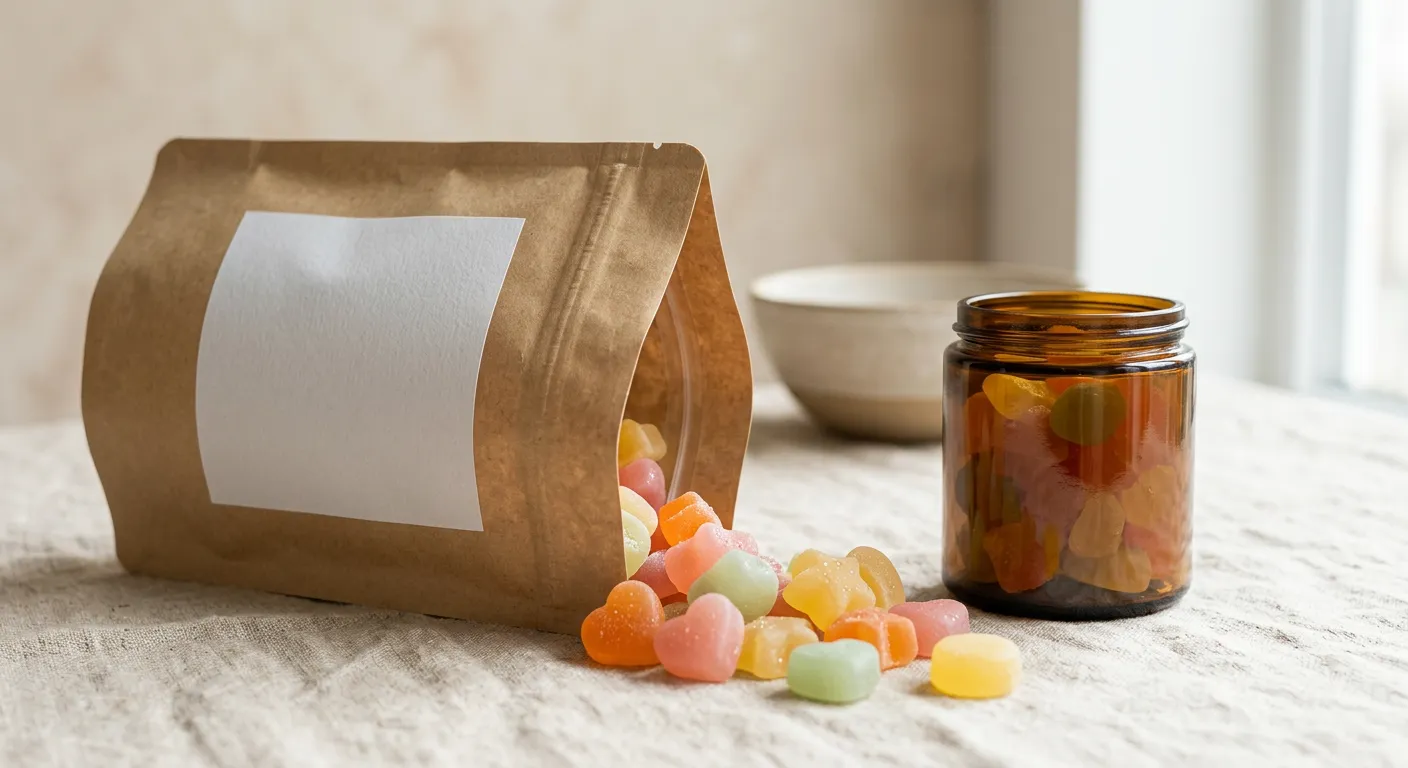
The consequence: a collagen gummy does not need gelatin. You can make the gummy with a pectin gel and add collagen peptides. The gummy is then gelatin-free... but not vegan, because the collagen is still animal-derived.
This is also why consumers searching for gelatin-free collagen gummies are often looking for two different things: a product without pork, or a product without any animal ingredient. Your label and product page should make it clear which one you offer.
Does vegan collagen exist?
Not strictly. The collagen used in supplements comes from cattle, pigs or fish (marine collagen). Products sold as vegan collagen are actually collagen booster formulas: they contain no collagen, but nutrients that support the body's own collagen formation.
That distinction matters for a brand, because the label must be accurate. Calling a product vegan collagen when it contains no collagen can be seen as misleading. It is safer to speak of a vegan beauty formula and highlight the nutrients that carry authorized claims.
Three ways to make a collagen gummy
Gelatin gummy + collagen
Gelatin gel, collagen peptides · No · Heat stability, narrower audience
Pectin gummy + collagen
Pectin gel, collagen peptides · No · Limited collagen per gummy
Beauty gummy
Pectin gel, vitamin C, zinc, biotin, plant actives · Yes · Do not claim collagen content
The dose question
This is the real technical challenge of collagen gummies. A gummy weighs only a few grams, so hydrolyzed collagen has to fit without damaging the texture or the pectin set. With careful formulation, you can reach from a few hundred milligrams up to about 2.5 g of marine collagen per 2-gummy serving, often paired with vitamin C.
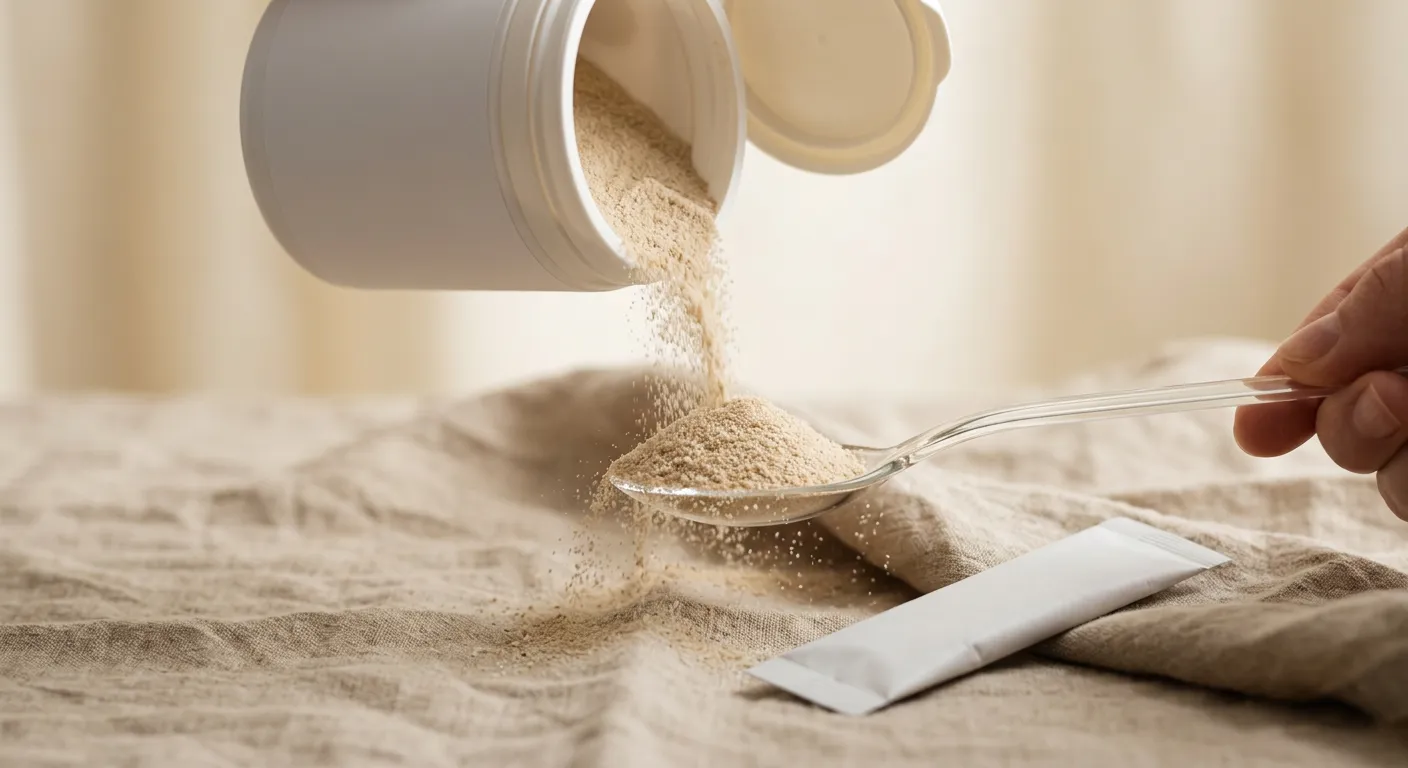
Beyond that, powder remains the best format for high doses, in a tub, a doypack or stick packs mixed into a drink. Many brands offer both: the gummy for enjoyment and consistency, the powder for the dose. We also make collagen powders.
If you still want a gummy that contains collagen, be transparent about the amount actually delivered per daily serving and about its source, marine or bovine. That is the first thing shoppers check in comparisons and reviews.

Authorized claims for a beauty formula
Collagen itself has no authorized health claim in the EU. The vitamins and minerals in the formula carry the claims:
- Vitamin C: contributes to normal collagen formation for the normal function of the skin.
- Zinc: contributes to the maintenance of normal skin, hair and nails.
- Biotin: contributes to the maintenance of normal skin and hair.
- Copper: contributes to normal hair and skin pigmentation.
Good news for gummies: vitamin C, zinc and biotin are dosed in small amounts and fit easily into a pectin gummy. A well-built vegan beauty formula can carry strong claims without promising collagen. Read more in our article on collagen for women and vitamin C.
Other actives in beauty gummies
- Hyaluronic acid: highly searched, but it has no authorized EU health claim, so present it without promises. See our hyaluronic acid page.
- Vitamin C-rich fruit extracts (acerola, camu camu): they support a more natural positioning.
- Botanical extracts (bamboo, nettle, horsetail): their claims are still on hold at EU level and need careful wording.
- Marine collagen: if added to a pectin gummy, state its fish origin and do not claim vegan.
Marine collagen also means a fish allergen statement on the label. That is one more argument for a fully plant-based beauty formula: simpler to label and open to a wider audience. Transparency pays: clearly showing each nutrient's daily amount, ingredient origins and vegan status is more convincing than a vague collagen promise.
Marine or bovine collagen for your powder
If you pair a gummy with a collagen powder, the source of the collagen becomes a key choice:
Marine collagen
Premium, beauty-focused, pork- and beef-free · Fish allergen statement required
Bovine collagen
Widely used, neutral taste, versatile · Origin and certifications to document
Both are hydrolyzed into peptides that dissolve well in water, coffee or smoothies. The powder can be unflavored for mixing, or flavored and paired with vitamin C so that the product carries an authorized skin claim. Single-serve stick packs make the daily routine easier and work well alongside a gummy in a discovery set.
Flavor is the other lever. Collagen peptides can carry a slight savory note, while a beauty gummy can be built around bright red-fruit or citrus profiles. Testing both formats with your audience before launch shows which one drives repeat purchases in your channel.
How to build your beauty range
Many brands combine two complementary products: a collagen powder or stick pack for the dose, and a beauty gummy for enjoyment and consistency. This approach covers both consumer expectations: perceived efficacy and ease of use.
Irati Production makes all of these in Saumur, France: marine collagen gummies set with pectin and free from gelatin, beauty gummies (without collagen) and collagen powders in tubs, doypacks or stick packs. None of our gummies are made with gelatin. Standard white label formulas in small batches or custom development: we help you launch a new SKU or extend an existing range. And if your supplier is maxed out: need capacity? We are here.
Your beauty range, made in France
Irati Production manufactures your gelatin-free marine collagen gummies, beauty gummies and collagen powders, with compliant claims.
- Gelatin-free marine collagen gummies set with pectin
- Pectin beauty gummies
- Collagen powder in tubs, doypacks or stick packs
- Vitamin C, zinc and biotin claims reviewed by our regulatory team
- Small batches available on our standard formulas
- ISO 22000 and HACCP certified, FDA-registered site
Our answers on gelatin-free collagen gummies
Can collagen gummies be gelatin-free?
Yes. The gummy can be set with pectin and contain hydrolyzed collagen peptides. It is then gelatin-free but not vegan, because collagen is animal-derived.
Does vegan collagen exist?
No, collagen always comes from animals (bovine, porcine or marine). Products called vegan collagen supply nutrients such as vitamin C, which contributes to normal collagen formation.
How much collagen is in a gummy?
Depending on the formula, from a few hundred milligrams up to about 2.5 g of marine collagen per 2-gummy serving. For higher doses, powder is the better format.
Which claims can beauty gummies make in the EU?
Collagen has no authorized claim. Use the nutrients' claims: vitamin C contributes to normal collagen formation for the normal function of the skin, zinc and biotin to the maintenance of normal skin.
Does Irati Production make collagen gummies?
Yes. In Saumur, France, it makes marine collagen gummies set with pectin and free from gelatin, as well as beauty gummies and collagen powders. None of its gummies are made with gelatin.
The information in this article is general. Each formula undergoes a technical and regulatory feasibility study.