Pectin vs Gelatin Gummies: What's the Difference?
Pectin or gelatin? It is the first decision to make when you launch a gummy supplement. Source, texture, heat stability, target consumers and label claims all depend on it. Here are the real differences between the two gelling agents, and why Irati Production makes only pectin gummies.
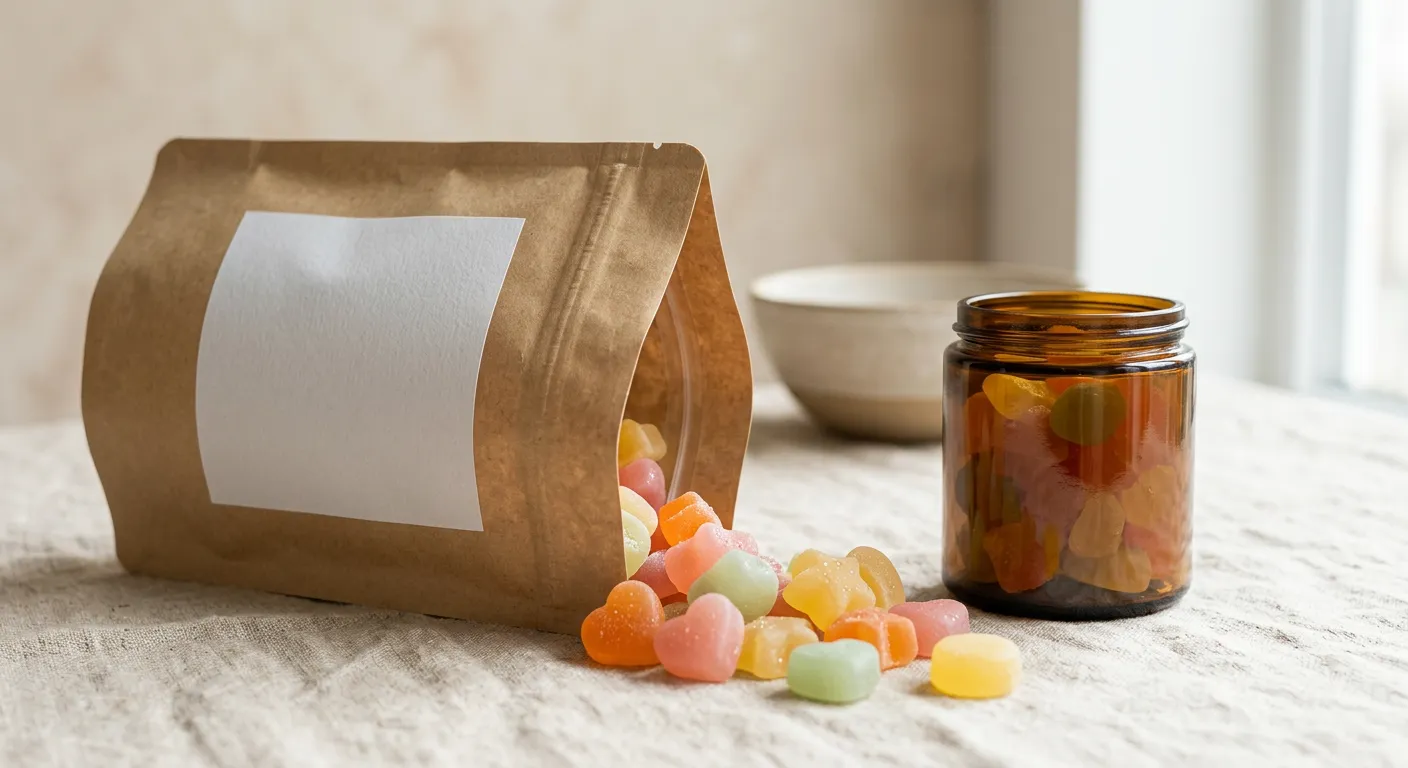
- Pectin is a plant-based gelling agent extracted from citrus peel or apples; gelatin is an animal protein (pork, beef or fish).
- Pectin gummies have a soft, short bite and a clean break; gelatin gummies are bouncy and chewier.
- Pectin is far more heat stable: gummies stick and deform less during shipping and summer storage.
- A pectin gummy works for vegans, vegetarians and consumers who avoid pork.
- Our gummies are made exclusively with pectin, in Saumur, France.
Two gelling agents, two very different origins
A gummy is a sweetened gel that carries active ingredients such as vitamins, minerals or botanical extracts. What gives it its shape and bite is the gelling agent, and two families dominate the market: pectin and gelatin.
Pectin is a plant fiber found in fruit cell walls. It is mostly extracted from citrus peel and apple pomace, and it is the same ingredient that sets jams and jellies. Gelatin is a protein obtained by breaking down the collagen in animal skin and bones, most often from pork, sometimes from beef or fish.
That difference in origin drives the whole product strategy: it decides whether you can claim vegan, which consumers you reach and what you can print on the pack.
Pectin vs gelatin at a glance
Source
Plant (citrus, apple) · Animal (pork, beef, fish)
Vegan / vegetarian
Yes · No
Texture
Soft, short bite, clean break · Elastic, chewy, bouncy
Heat stability
Good: holds its shape · Lower: can soften and stick
Flavor release
Bright, fruity · Neutral to slightly savory
Target consumers
Vegans, vegetarians, pork-free diets · Mainstream non-vegetarian buyers

Texture: tender bite vs chewy bounce
Texture is the first thing consumers notice. A pectin gummy has a short, tender bite, closer to a fruit jelly, and breaks cleanly between the teeth. A gelatin gummy is elastic, it springs back and takes more chewing: that is the classic gummy bear texture.
Neither is better in absolute terms. But for a supplement taken every day, the tender pectin texture is often preferred: it is pleasant, quick to eat and it carries fruit flavors very well.
Heat stability, storage and shipping
Gelatin melts at a temperature close to body temperature. That is what gives it its mouthfeel, and also its main weakness: a bottle of gelatin gummies left in a hot truck, a warm warehouse or a mailbox in July can soften, stick together and turn into a single block.
A pectin gel is much more stable in heat. For a brand that sells online, ships through the summer or exports to warm climates, that is a concrete advantage: fewer complaints, fewer stuck gummies and a better unboxing experience.
Vegan, halal and kosher: who you can reach
Searches for gelatin-free gummies keep growing, driven by vegans and vegetarians but also by consumers who avoid pork for cultural or religious reasons. A pectin recipe lets you speak to all of them with a single SKU.
One caveat: the gelling agent is not enough. To claim vegan, every ingredient must qualify. Vitamin D3 must come from a plant source (lichen), colors must not come from carmine, and the anti-stick coating must not be beeswax or shellac. Halal or kosher claims also require a dedicated certification.
What changes for formulation
Pectin is more demanding to work with than gelatin. Gel setting depends on acidity, solids content and temperature, and some actives, such as minerals or very acidic extracts, can disrupt it. Each formula has to be adjusted rather than dropped into a generic base.
- Acidity: it must be controlled so the gel sets and stays stable until the best-before date.
- Active load: a gummy weighs only a few grams; the more actives you add, the harder it is to hold texture and taste.
- Flavor masking: vitamins and minerals often taste bitter or metallic and need well-matched flavors.
- Sugar or sugar-free: a no-added-sugar version needs a specific gelling system and sweeteners.
That balance between dose, texture, taste and stability is the job of our custom formulation team.
How a pectin gummy is made
- Syrup cooking: pectin is dispersed and cooked with sugars or polyols to the right solids content.
- Adding actives and flavors: vitamins, minerals or extracts go in at the end of cooking, when heat exposure is lowest.
- Acidifying and depositing: acid triggers gelling and the mass is immediately deposited into molds.
- Curing and finishing: gummies are demolded, stabilized and coated with sugar, acid or oil so they do not stick.
- Packaging: bottles or doypacks, labeling and release testing before shipping.
With pectin, the window between cooking, acid addition and depositing is short, which calls for specific know-how and dedicated lines.
Pectin also works well with the actives brands ask for most: vitamins, plant extracts, creatine or electrolytes at moderate doses. Each active is tested for its effect on gel setting, color and taste before the recipe is locked, so the gummy you approve in the lab is the one that ships months later.
What goes on the label
Pectin (E440 in Europe) and gelatin both appear in the ingredient list. A pectin gummy can state gelatin-free and, if the whole formula qualifies, vegan. These claims must be accurate and documented, because they commit the brand. Our regulatory team reviews every label before production, for the EU and US markets.
Why we chose pectin
Irati Production makes all of its gummies with pectin, in France, at its Saumur facility. We do not make gelatin gummies. The choice matches what the market wants today: plant-based products, a tender texture, reliable shipping performance and one recipe that suits the widest possible audience.
Whether you are launching a first SKU, extending an existing brand or developing a product for a lab, we start from our standard white label formulas or from a custom development. And if your current supplier is maxed out: need capacity? We are here. See our gummies.
Your gummies, made in France
Irati Production formulates and manufactures 100% pectin gummies for your brand, from recipe to retail-ready product.
- Pectin gummies, gelatin-free
- Standard white label formulas or custom development
- Small batches available on our standard formulas
- ISO 22000 and HACCP certified, FDA-registered site
- Storage, order management and direct shipping from Allonnes
Our answers on pectin vs gelatin gummies
What is the difference between pectin and gelatin gummies?
Pectin is a plant-based gelling agent from fruit, while gelatin is an animal protein. Pectin gummies are vegan, softer and more heat stable; gelatin gummies are chewier and more elastic.
Are pectin gummies always vegan?
Not automatically. The gelling agent is plant-based, but every other ingredient, including vitamin D3, colors and the coating, must also be animal-free to claim vegan.
Do pectin gummies melt in the heat?
A pectin gel is much more heat stable than gelatin. Pectin gummies deform and stick far less during shipping and warm-weather storage.
Are gelatin-free gummies suitable for people who avoid pork?
Yes, a pectin gummy contains no pork gelatin. Halal or kosher claims, however, require a specific certification of the formula and the site.
Does Irati Production make gelatin gummies?
No. All of its gummies are pectin gummies, made in Saumur, France.
The information in this article is general. Each formula undergoes a technical and regulatory feasibility study.