Private label probiotics: strains, stability and formats
A probiotic supplement is built on live microorganisms. Which strains you choose, how many live cells you deliver and whether they survive until the end of shelf life decide both product quality and what the label may say. Here are the key points from the R&D team at Irati Production.
Contact us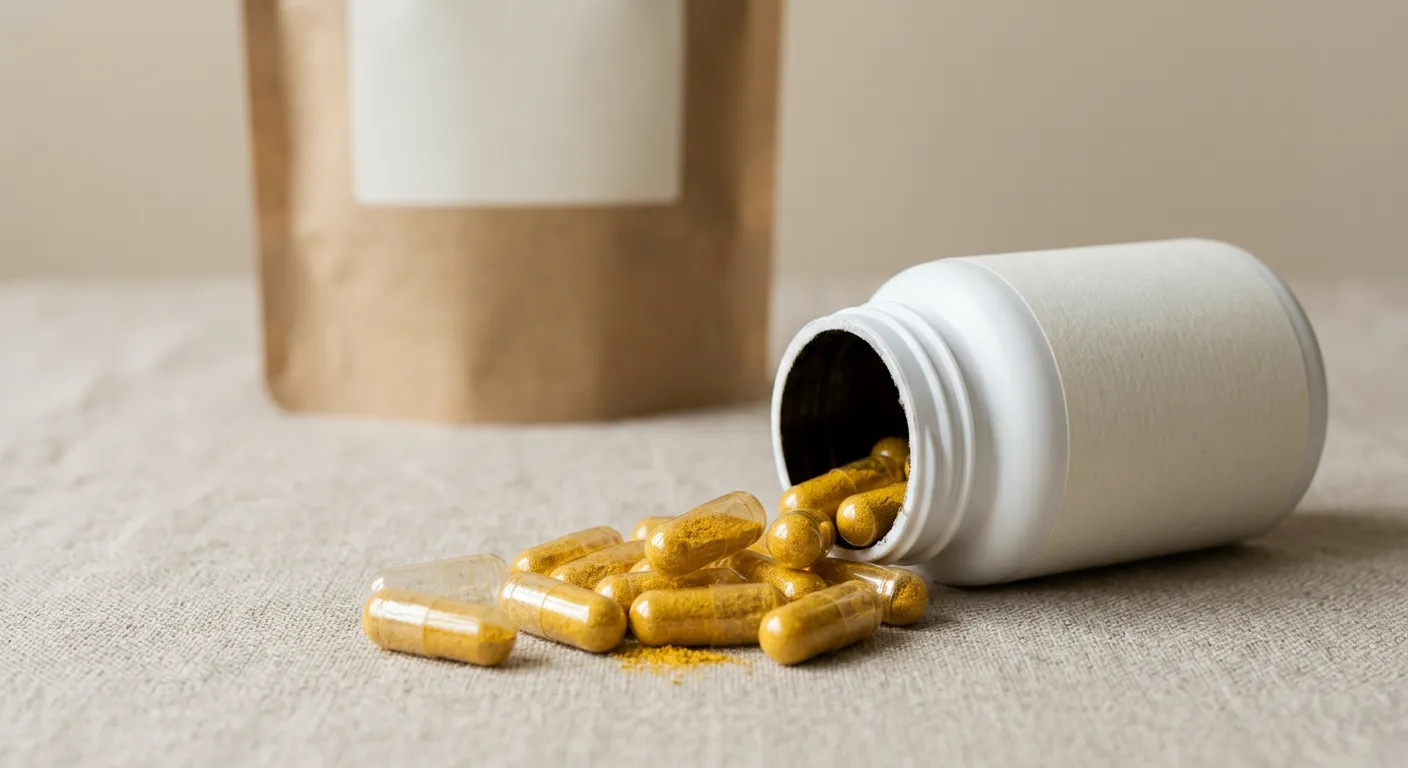
- Since January 2023, the French authority (DGCCRF) accepts the term "probiotic" as a category name on food supplement labels, under conditions.
- The generally accepted amount is in the range of 10⁷ to 10⁹ live cells of a strain per day.
- The only claim allowed refers to the balance of the intestinal flora; "strengthening" or "increasing" the flora is excluded.
- Stability depends mainly on moisture, heat and oxygen, so format and packaging must be chosen accordingly.
- Irati Production manufactures your probiotics as capsules, powders and tablets at its manufacturing unit in Saumur, France.
What French rules allow for the word "probiotic"
At EU level, "probiotic" has long been treated as a non-specific health claim under Regulation (EC) No 1924/2006, and no health claim for a probiotic strain in food supplements appears on the Union list set by Regulation (EU) No 432/2012.
In January 2023, the DGCCRF updated its Q&A: "probiotics" is now accepted on food supplement labels as a category name, with reference to Article 6 of Directive 2002/46/EC. Probiotics are defined as live microorganisms which, when consumed in adequate amounts, benefit the host's health by contributing to the balance of the intestinal flora.
- Amount: the product must supply enough live cells of a strain per day, generally accepted as 10⁷ to 10⁹.
- Claim: only a claim referring to the balance of the intestinal flora is allowed, such as "contributes to the balance of the intestinal flora". Wording about "strengthening" or "increasing" the flora is not accepted.
- Safety: the operator must demonstrate strain safety and check that the strain is not an unauthorised novel food.
"Prebiotic", by contrast, remains a non-specific health claim and must be accompanied by an authorised claim linked to the prebiotic action. Other EU countries have their own positions, so export projects need a market-by-market check.
Choosing your strains
A probiotic is defined at strain level, not just species level: two strains of the same species can behave very differently, including in stability. Your specification should state the genus, species and reference of each strain, as supplier data sheets do.
For safety, EFSA's QPS list (qualified presumption of safety) is the most widely used reference in Europe. It does not replace a novel food status check or the strain's history of use. For every raw material, we require a certificate of analysis covering live cell count, strain identification and microbiological testing.
Stability: live cells until the best-before date
Probiotics are supplied as freeze-dried powders, and their live cell count falls over time. Three factors matter most:
- Moisture: the main threat. Excipients, capsule shells and the production environment must stay as dry as possible.
- Heat: any heated step or warm storage speeds up the loss of viability.
- Oxygen and combinations: some ingredients, such as certain minerals or acidic extracts, can reduce strain survival and are validated in trials.
The amount on the label must stay true until the end of shelf life. The best-before date of a probiotic is therefore set from stability studies with regular cell counts, never by analogy with another formula.
Capsules, powders, tablets: which format?
Capsules are the most common choice: they are filled cold, which protects the strains, and dosing is precise. We manufacture private label capsules in sizes 1, 0 and 00, vegetable or gelatin, packed in PET bottles, jars or doypacks. Vegetable capsules are often preferred for probiotics.
Single-dose powder sticks suit formulas combining probiotics and fibres, since each stick protects its dose until opened. Tablets, including chewable tablets, are possible once strain survival through compression has been validated.
Pectin-based gummies require a cooking step that most strains do not tolerate well, so this format is assessed case by case. See all options on our private label probiotics manufacturer page.
Labelling and additional claims
Labels follow Regulation (EU) No 1169/2011 and, in France, Decree No 2006-352: the name "food supplement", recommended daily dose, a warning not to exceed it, a statement to keep out of reach of young children and amounts per serving. For probiotics, it is standard practice to list each strain and the daily amount supplied.
To go beyond intestinal flora, brands rely on added nutrients. For example, "vitamin C contributes to the normal function of the immune system", provided the daily serving supplies at least 15% of the reference intake, i.e. 12 mg. Our team can help with these points through our regulatory support services.

Your probiotics, made in France
Irati Production manufactures your probiotic supplements as private label or custom formulas at its manufacturing unit in Saumur.
- Capsules in sizes 1, 0 and 00, vegetable or gelatin
- Powders in sticks or doypacks from 50 g to 1 kg
- Tablets, including chewable tablets
- 3 capsule filling machines and 4 blending rooms
- ISO 22000 and HACCP certified, FDA registered
Our answers on private label probiotics
Can "probiotic" appear on a food supplement sold in France?
Yes, since January 2023, as a category name, if the product supplies enough live cells of a strain per day, in the range of 10⁷ to 10⁹. Irati Production checks this from the feasibility study onwards.
Which claim can a probiotic carry?
Only a claim on the balance of the intestinal flora, such as "contributes to the balance of the intestinal flora". Irati Production advises against any wording about strengthening or increasing the flora.
What is the best format for a probiotic?
Capsules are the most common because they are filled cold. Irati Production also manufactures probiotics as powders, in sticks or doypacks, and as tablets.
How is a probiotic's best-before date set?
Through stability studies with live cell counts, so the amount on the label stays true until the end of shelf life. Irati Production builds these studies into development.
Can probiotics be combined with vitamins?
Yes. Vitamins and minerals bring their own authorised claims, subject to dose conditions. Irati Production validates the compatibility of each ingredient with the strains in trials.
The information in this article is general and does not constitute regulatory advice. Each formula undergoes a technical and regulatory feasibility study.