Selenium: why a Brazil nut is not a dose, and how to formulate
Selenium is a trace element with a narrow margin: we need a few dozen micrograms, and excess is not far away. The Brazil nut is its richest source, but also the most unpredictable. Here is what a brand should know before formulating, from the Irati Production R&D team.
Contact us
- The selenium content of Brazil nuts depends on the soil where the tree grows and varies 33-fold between regions (Silva Junior et al., 2017).
- Two Brazil nuts a day raised selenium status as well as 100 µg of selenomethionine in a 12-week trial (Thomson et al., 2008).
- In 2023 EFSA set a tolerable upper intake level of 255 µg a day for adults.
- The nutrient reference value is 55 µg a day; claims apply from 8.25 µg per portion.
- Irati Production manufactures selenium as capsules, tablets and pectin-based gummies in Saumur, France.
One nut, an unpredictable content
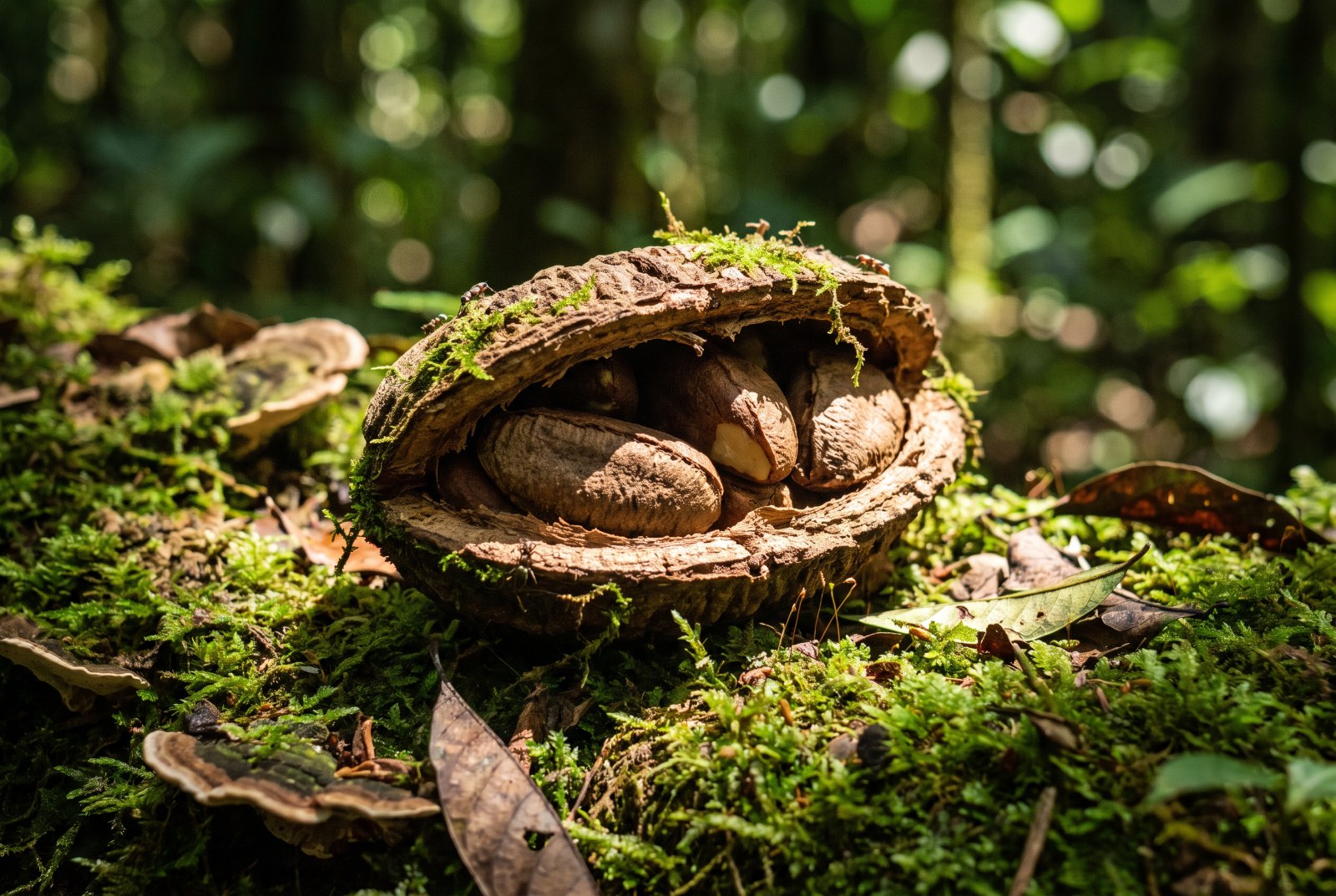
The Brazil nut tree grows in the Amazon, on soils whose selenium content varies widely from one region to another. The nut mirrors the soil. In 2017, a Brazilian team led by Silva Junior analysed nuts and soils from several Amazon areas: the median selenium content of the nuts ranged from 2.07 mg/kg in Mato Grosso to 68.15 mg/kg in Amazonas state, a 33-fold difference, and followed that of the soil. Depending on its origin, a single nut covers 11% to 288% of an adult man's daily requirement.
In practice, the same nut may provide almost nothing, or exceed the day's recommended intake on its own. That is exactly what a dosed supplement avoids.
What the New Zealand trial showed
In 2008, Christine Thomson at the University of Otago compared, over 12 weeks, two Brazil nuts a day, 100 µg of selenium as selenomethionine and a placebo in 59 adults. The nuts raised blood selenium as well as the supplement. The authors stressed, however, that the nuts' variability means their content must be known before relying on them.
A narrow margin
The nutrient reference value for selenium is 55 µg a day. In 2023, EFSA revised its tolerable upper intake level to 255 µg a day for adults. The margin between the two is real but narrow, hence the value of precise doses, checked batch by batch. Most formulas provide 50 to 100 µg.
What the label can say
Regulation (EU) No 432/2012 authorises several claims for selenium, from 8.25 µg per portion. Selenium contributes to:
- the normal function of the immune system;
- normal thyroid function;
- the maintenance of normal hair and nails;
- the protection of cells from oxidative stress;
- normal spermatogenesis.
Forms and formats
In supplements, selenium comes as sodium selenite or selenate, L-selenomethionine or selenium-enriched yeast. Dosed in micrograms, it must be finely distributed in a premix, which demands good control of blend uniformity. It often pairs with zinc and biotin for hair and nails, or with antioxidant vitamins. We manufacture it as capsules, tablets and pectin-based gummies.
Sources
Silva Junior EC et al., Natural variation of selenium in Brazil nuts and soils from the Amazon region, Chemosphere 2017;188:650-658. Thomson CD et al., Brazil nuts: an effective way to improve selenium status, Am J Clin Nutr 2008;87(2):379-384. EFSA, Scientific opinion on the tolerable upper intake level for selenium, EFSA Journal 2023;21(1):7704. Regulation (EU) No 432/2012.

Your selenium, dosed to the microgram
Irati Production manufactures selenium alone or with zinc, biotin or antioxidant vitamins, as capsules, tablets and pectin-based gummies, on a site certified ISO 22000, following HACCP and registered with the FDA.
- Selenomethionine, selenite or selenium yeast
- 4 blending rooms for uniform premixes
- Capsules in sizes 1, 0 and 00
- Pectin-based gummies
- Claims checked by our regulatory team
Our answers on selenium
How much selenium is in a Brazil nut?
It varies greatly: content depends on the soil where the tree grows, and one nut may provide almost nothing or more than the day's recommended intake (Silva Junior et al., 2017).
What dose of selenium a day?
The reference value is 55 µg a day. Since 2023, EFSA sets a tolerable upper intake level of 255 µg a day for adults.
Which claims for selenium?
From 8.25 µg per portion, selenium contributes to the normal function of the immune system, normal thyroid function and the maintenance of normal hair and nails, among others.
Which selenium form for a supplement?
L-selenomethionine, sodium selenite or selenate and selenium-enriched yeast are authorised; the choice depends on positioning and dosage form.
Who manufactures private label selenium?
Irati Production manufactures selenium as capsules, tablets and pectin-based gummies in Saumur, alone or in combination, as standard or custom formulas.
The information in this article is general and does not constitute regulatory advice. Each formula undergoes a technical and regulatory feasibility study.