Supplement Packaging: Bottle, Jar, Pouch or Stick Pack?
Choosing supplement packaging is not just a design decision. It drives shelf life, cost of goods, freight, retail presence and the consumer experience. Here is a simple framework to choose between bottles and jars, stand-up pouches and single-serve stick packs, based on your dosage form and your sales channel.

- The right packaging starts with the dosage form: gummies, capsules, tablets and powders have different needs.
- Moisture, oxygen, light and heat are the four threats to a supplement; packaging must keep them out until the best-before date.
- Bottles reassure in pharmacies, stand-up pouches are light and cost-effective for e-commerce, stick packs target on-the-go use.
- The EU Packaging and Packaging Waste Regulation (PPWR) is pushing toward recyclable formats with less empty space.
- Irati Production manufactures and packs supplements in Saumur, France, in jars, bottles, pouches and stick packs.
Packaging is a technical decision first
When a brand launches a new supplement, packaging often comes last, after the formula and the label design. That is a common and costly mistake. Primary packaging, the container in direct contact with the product, is a protective barrier. It must keep actives stable and preserve texture and taste until the best-before date. The wrong choice can make gummies stick together, cake a powder or degrade a vitamin that is sensitive to oxidation.
Packaging also drives cost of goods, freight weight, shelf footprint, breakage rates in e-commerce and, increasingly, compliance with the new EU packaging rules. The right approach is to choose packaging alongside the formula, with your contract manufacturer, not after it.
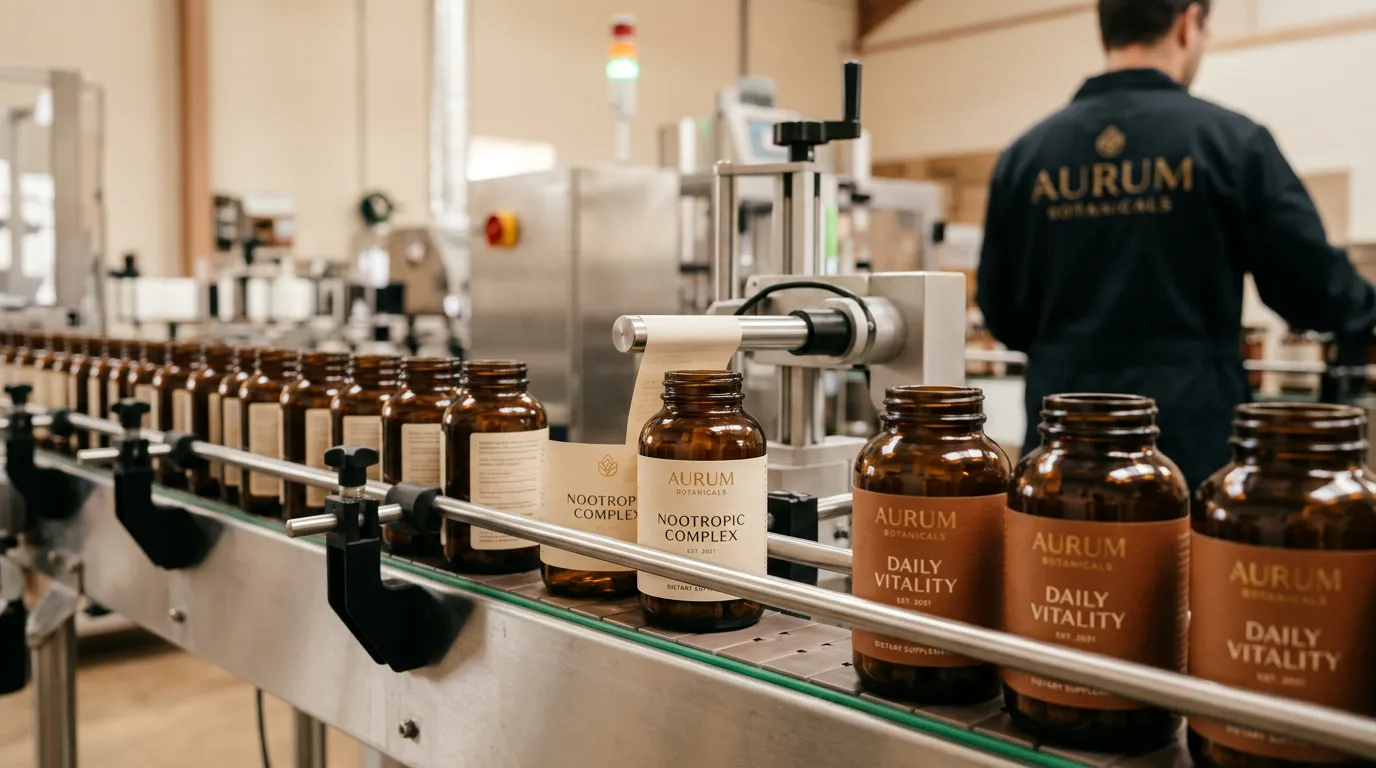
The four threats to a supplement
- Moisture: the number one risk for powders (caking), tablets and capsules. A jar with a desiccant or a high-barrier film is often required.
- Oxygen: it degrades omega-3s, some vitamins and flavors. High-barrier materials, sometimes with nitrogen flushing, are the answer.
- Light: opaque or amber containers protect light-sensitive actives.
- Heat: mainly an issue for gummies, which can stick together. The container should buffer temperature swings and prevent crushing.
These constraints are confirmed by stability studies, and the best-before date is set from the data, not the other way around.
Bottle, pouch, stick pack: side by side
Best for
Gummies, capsules, tablets, powders · Powders, gummies, capsule refills · Soluble or dispersible powders
Protection
Very good, rigid, desiccant possible · Good, depending on barrier film · Very good, each dose sealed until use
Brand image
Trusted, pharmacy and drugstore · Modern, natural, e-commerce · Premium, convenient, on the go
Logistics
Higher volume and weight · Light, little empty space · Needs a carton, very compact
Consumer use
Daily, at home · Daily, resealable zipper · Travel, gym, office
Bottles and jars: the safe choice
The rigid bottle remains the reference for capsules and tablets sold in pharmacies and drugstores. It protects well, stacks neatly on shelf and signals quality. Wide-mouth jars suit gummies and scoopable powders. Their weak points are freight volume and material use, two things the PPWR will look at closely. Brands that stay with this format can right-size the container, use a single material and add clear sorting instructions.
Stand-up pouches: light, cost-effective and on trend
The stand-up pouch with a zipper (often called a doypack in Europe) has taken over e-commerce for powders and is growing for gummies and capsules. It is light, ships efficiently and offers a large branding surface. Recyclable mono-material versions are available. It also works well as a refill to retain customers who first bought a jar. Learn more on our doypack packaging page.
Stick packs: the ready-to-use dose
A stick pack holds a single serving of powder. Consumers have nothing to measure: they tear it open and pour it into a bottle, a shaker or a glass of water. It is ideal for electrolytes, creatine, collagen and functional drinks, and for sampler boxes. It requires a secondary carton and a free-flowing powder. Our page on stick pack manufacturing covers the technical side.
Best practices by dosage form
- Gummies: a rigid jar or a thick pouch prevents crushing and sticking; a desiccant can help depending on the recipe. Our gummies are pectin-based.
- Capsules: the bottle is still the standard; a pouch is a smart refill option online.
- Tablets: they keep well in jars or pill bottles with a desiccant, and in doypacks for refills.
- Powders: jar with scoop, zipper pouch or stick packs; a high-barrier film prevents caking.
How to choose in four questions
- What is my dosage form? A capsule and a powder are not protected the same way.
- Where will I sell? Pharmacies often expect a bottle, e-commerce favors light pouches, gyms love stick packs.
- How will my customer use it? Every day at home, or on the go?
- What is my range strategy? Many brands pair a core format with a trial or refill format, from the same formula.
Common mistakes
Picking packaging from a photo without a stability test; oversizing the container to look bigger on shelf, which the PPWR will penalize; forgetting the secondary carton for stick packs; or switching materials mid-life without revalidating the best-before date. These mistakes are expensive, sometimes forcing a recall or a repack. Avoiding them simply means working on packaging with your manufacturer from the first prototype.
Primary and secondary packaging work together
Primary packaging protects the product; secondary packaging (cartons, display boxes, shipping cases) protects the primary pack and sells it. A stick pack needs a carton, a bottle may or may not need one, and a pouch usually ships as is. Thinking about both levels at once avoids surprises on cost, shelf presence and shipping damage.
What the EU PPWR means for your packaging
The EU Packaging and Packaging Waste Regulation (PPWR) sets a clear direction: recyclable packaging, less empty space and less over-packaging, with phased deadlines. For a supplement brand selling in Europe, that means favoring mono-material packaging, sizing containers to the actual fill and planning for new labeling requirements. Read our full PPWR packaging guide.
Mandatory labeling, whatever the format
In the EU, a food supplement label must carry the name "food supplement", the ingredient list with allergens, the recommended daily dose, the required warnings, net quantity, best-before date and batch number. On a stick pack, space is tight: the full information goes on the carton and the stick carries the essentials. Check this with your manufacturer's regulatory team at the mock-up stage.
At Irati Production, we manufacture and pack your supplements at our site in Saumur, France, and store them in Allonnes. You can switch formats or add a refill without changing manufacturers.
Your supplement, in the right package
We manufacture your formula and pack it in the format that fits your dosage form and your sales channel.
- Jars, bottles, stand-up pouches and stick packs
- Materials chosen for your formula's stability
- Labeling reviewed by our regulatory team
- ISO 22000 and HACCP certified, FDA-registered site
- Storage, order fulfillment and shipping from Allonnes
Our answers on choosing supplement packaging
What is the best packaging for supplements?
There is no one-size-fits-all answer: bottles suit capsules and tablets, stand-up pouches suit powders sold online, and stick packs suit on-the-go powders. The choice depends on dosage form, formula stability and sales channel.
Does a stand-up pouch protect as well as a bottle?
Yes, if the film has the right moisture and oxygen barrier. A rigid jar is still more crush-resistant, which matters for gummies.
Can the same product be sold in a jar and in stick packs?
Yes. The same powder can be packed in jars, pouches and stick packs, giving brands a daily format and a trial or travel format.
Does the EU PPWR ban certain supplement packaging?
The PPWR mainly requires recyclable packaging and less empty space and over-packaging, with phased deadlines. Brands should factor it in when designing new products.
What information must appear on a supplement stick pack?
The full mandatory information appears on the retail carton; the stick pack carries the key identification details, including batch number and best-before date, based on the product's regulatory review.
The information in this article is general. Each package undergoes a compatibility study with the formula and a regulatory review.