Vitamin Gummies: Which Vitamins Work in Gummy Form?
Vitamin gummies are now one of the most requested supplement formats in pharmacies and online. But not every vitamin fits a gummy equally well. Here is what works, what is difficult, and how Irati Production keeps every gummy at label claim until the end of its shelf life.

- Vitamins D, C, B6, B12, biotin and folate are well suited to gummies.
- Iron, calcium and high-dose magnesium are hard: metallic taste, too much bulk, poor texture.
- Vitamins are sensitive to heat, light and moisture, so recipe and packaging must protect them.
- A controlled manufacturing overage keeps the label claim accurate until the best-before date.
- Our vitamin gummies are pectin gummies made in France.
Why consumers love gummy vitamins
Gummies changed the way people take vitamins. No water, no pill to swallow, a fruity taste: for many consumers it is the format that finally makes a daily routine stick. Reviews say it over and over: convenience and enjoyment come first.
For a brand, it is a highly visual format that stands out on shelf and on social media. Behind the fun, though, there is a real technical challenge: fitting a meaningful dose of vitamins into a small gel weighing a few grams, with good taste, for the entire shelf life.
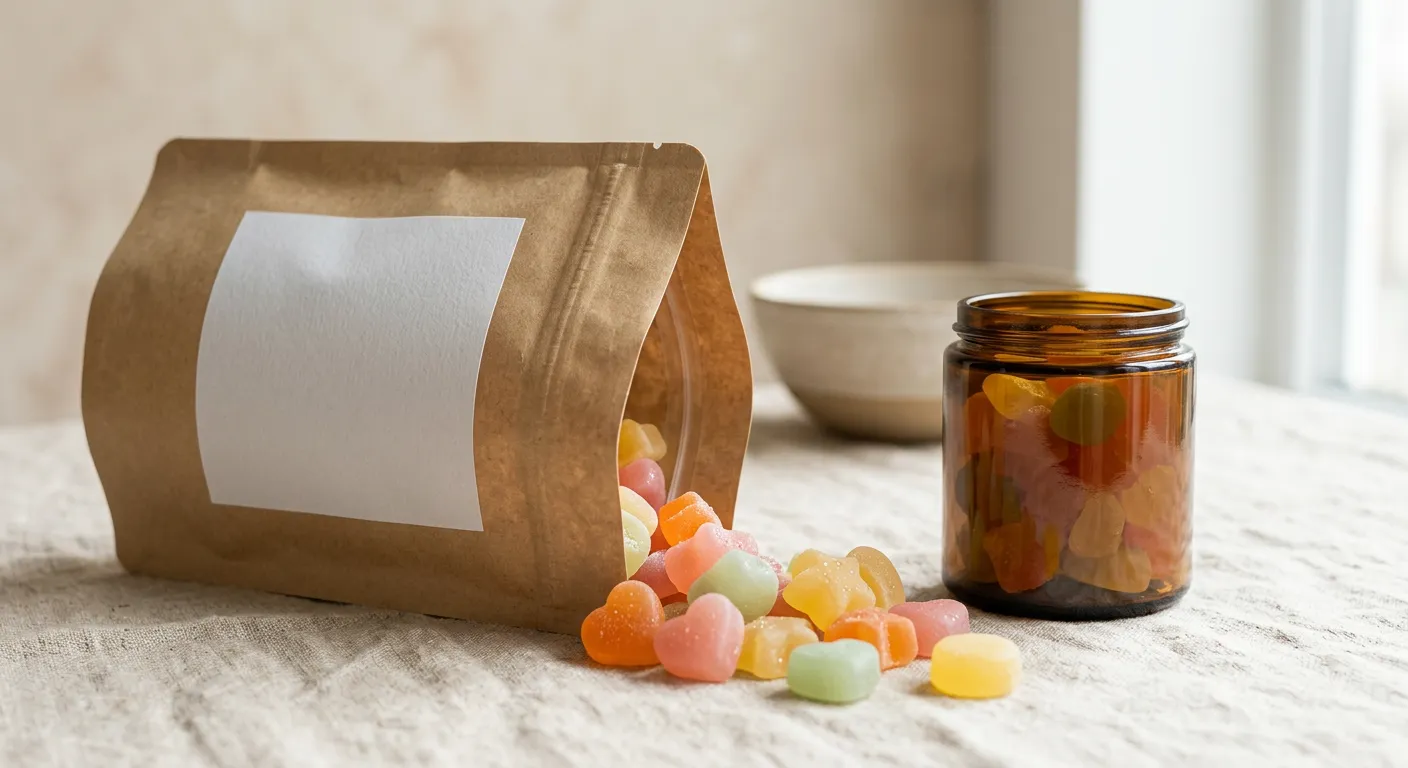
Vitamins that work well in gummies
Vitamins are active at low doses, from micrograms to a few tens of milligrams. They take up little room, which makes them good candidates:
- Vitamin D: a very small dose, ideal for gummies. It contributes to the normal function of the immune system. Our gummies use plant-sourced D3 (lichen) or D2.
- Vitamin C: in high demand, it contributes to the reduction of tiredness and fatigue and to normal immune function. Its tartness pairs well with fruit flavors.
- B vitamins (B6, B9, B12): low doses, often combined in energy complexes. B6 and B12 contribute to the reduction of tiredness and fatigue.
- Biotin: the backbone of beauty gummies, it contributes to the maintenance of normal hair and skin.
- Vitamin E: feasible, often used in beauty and multivitamin blends.
What is harder to do
The difficulty starts with minerals and with actives dosed in hundreds of milligrams:
Iron
Strong metallic taste, interacts with the recipe · Low dose, suitable form, masking flavors, or another format
Calcium
Useful dose is too bulky · Several gummies a day, or powder / tablet
Magnesium
Bulk, taste, impact on texture · Limited dose per gummy, well-chosen salt
Zinc
Astringent taste · Low dose and matching flavor
Full-spectrum multivitamin
Too many actives for the space · Focus on key nutrients, 2 gummies a day
The rule of thumb: the higher the daily dose of an active, the harder the gummy format becomes. You can spread the dose over several gummies or switch formats. We also make capsules and tablets when a gummy is not the right fit.
Stability: the real challenge of vitamin gummies
Vitamins are fragile. Heat during cooking, the acidity of the recipe, moisture, oxygen and light all degrade them over time. Vitamin C, B12, A and folate are among the most sensitive. Gummies also hold more water than capsules or tablets, which speeds up some reactions.
To keep the label claim accurate until the best-before date, the manufacturer:
- Adds vitamins at the right time, as late as possible in the process, to limit heat exposure.
- Selects stabilized forms such as microencapsulated vitamins or more stable salts.
- Builds in a controlled overage to offset losses over time, within the tolerances accepted by authorities.
- Runs stability studies that check potency at several time points.
- Protects the product with suitable packaging, such as opaque bottles or barrier doypacks.
Packaging and shelf life
Packaging is part of the formula. Gummies absorb moisture from the air, and vitamins degrade faster when exposed to light and oxygen. The right container protects both texture and potency:
- Opaque bottles with an induction seal limit light and moisture exposure.
- Barrier doypacks offer a lighter, resealable option that works well for e-commerce.
- Desiccants or oxygen absorbers can be added for the most sensitive formulas.
- Storage advice on the label (cool, dry place, close after use) helps consumers keep the product in good condition.
The best-before date is then set from stability data, not from guesswork. A realistic shelf life protects your brand from out-of-spec products on the shelf and from consumer complaints.
Doses and claims: what the rules say
In the EU, the vitamins and minerals allowed in food supplements, their chemical forms and their maximum amounts are regulated at EU and national level. To use a health claim ("contributes to..."), the product must supply a significant amount of the nutrient, as a rule at least 15% of the nutrient reference value per daily dose. For the US market, the label follows FDA Supplement Facts rules and structure/function claim requirements.
Another point to watch: a gummy looks like candy. Mandatory statements (do not exceed the recommended daily dose, keep out of reach of young children) and responsible design are essential, especially for fat-soluble vitamins like vitamin D, which accumulate in the body.
Which vitamins for which need?
- Immunity: vitamin D, vitamin C and zinc, which contribute to the normal function of the immune system.
- Energy: vitamins B6, B12, C and magnesium, which contribute to the reduction of tiredness and fatigue.
- Beauty: biotin and zinc for normal hair and skin, vitamin C for normal collagen formation.
- Healthy aging: vitamin D, which contributes to the maintenance of normal bones.
- Kids: vitamins D and C, with age-appropriate doses and responsible packaging.
Every claim must be used word for word and backed by a sufficient dose of the nutrient. That is how you build a range that pharmacists and consumers trust.
Launch your vitamin gummy range
Irati Production makes pectin vitamin gummies at its facility in Saumur, France. Start from a standard white label formula, ideal for launching a new SKU quickly in a small batch, or develop a custom formula with our team.
We work with startups, established brands adding a gummy to their line, and labs looking for a European manufacturer. And if your supplier is maxed out: need capacity? We are here. See our gummies.
Your vitamin gummies, made in France
Irati Production formulates and manufactures your pectin vitamin gummies, with potency guaranteed until the best-before date.
- Vitamins D, C, B complex, biotin, multivitamin blends
- Pectin gummies
- Stability studies and labeling reviewed by our regulatory team
- Small batches available on our standard formulas
- ISO 22000 and HACCP certified, FDA-registered site
Our answers on vitamin gummy formulation
Which vitamins can be made into gummies?
Low-dose vitamins work best: vitamin D, vitamin C, B6, B9, B12, biotin and vitamin E. High-dose minerals such as calcium or iron are much harder to fit.
Are gummy vitamins as effective as capsules?
At the same dose, and if potency is guaranteed until the best-before date, a gummy delivers the same nutrients. Formulation quality and stability testing make the difference.
Why do vitamins degrade in gummies?
Vitamins are sensitive to heat, acidity, moisture and light. Manufacturers add them late in the process, use stabilized forms and apply a controlled overage.
Can you make multivitamin gummies?
Yes, by selecting key nutrients and often splitting the dose over two gummies a day. A very complete multivitamin with many minerals is better suited to a tablet or capsule.
Where does Irati Production make its vitamin gummies?
In Saumur, France, at an ISO 22000 and HACCP certified, FDA-registered site. All of its gummies are made with pectin.
The information in this article is general. Each formula undergoes a technical and regulatory feasibility study.