BCAA: the 2:1:1 ratio, vegan versions and labelling rules
Leucine, isoleucine, valine: BCAA remain a gym classic. The market is shifting towards plant-based, fermented and flavoured BCAA. Here is what you need to know to choose or launch a product.
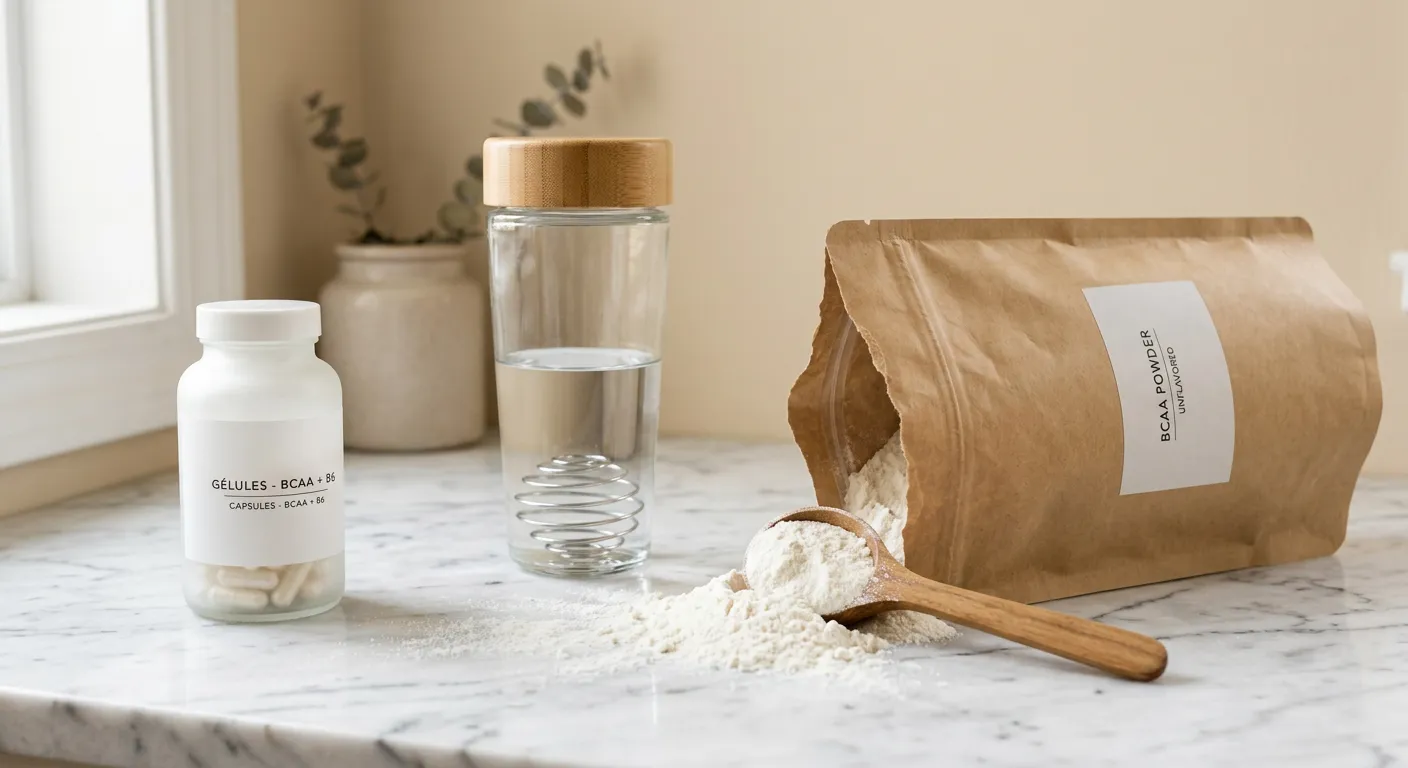
- BCAA are three essential amino acids: leucine, isoleucine and valine.
- The 2:1:1 ratio (twice as much leucine) is the most common; 4:1:1 and 8:1:1 put more emphasis on leucine.
- No health claim is authorised in Europe for BCAA on their own: communication must stay factual.
- You can add vitamin B6, which contributes to normal protein and glycogen metabolism (authorised claim).
- Strong trend: vegan BCAA from plant fermentation, sugar-free, with natural flavourings.
What are BCAA?
BCAA stands for Branched-Chain Amino Acids: leucine, isoleucine and valine. They are called “essential” because the body cannot produce them, so they must come from the diet. They are naturally present in all proteins, especially whey, meat, eggs and pulses.
2:1:1, 4:1:1, 8:1:1: what do the ratios mean?
What you can say on the label
This is the point many brands miss: EFSA has not validated any health claim for BCAA. You therefore cannot state that they “support recovery” or “preserve muscle mass”.
To give your product a genuine selling point, combine it with nutrients that carry authorised claims:
- vitamin B6: contributes to normal protein and glycogen metabolism and to the reduction of tiredness and fatigue;
- magnesium: contributes to normal muscle function and to electrolyte balance;
- potassium: contributes to normal muscle function.
What dosage?
There is no regulatory reference intake for BCAA. Products on the market generally provide 2.5 to 10 g per serving, most often around 5 g, taken around training. The chosen dosage must be consistent with the overall formula and the consumer's total protein intake.
The trend: plant-based, fermented BCAA
Historically, some amino acids were derived from animal materials. Today, consumers want vegan BCAA, produced by fermenting plant materials (maize, beet). Other strong expectations:
- no added sugar, with sweeteners of natural origin;
- natural flavourings and natural colours;
- 2-in-1 formulas: BCAA + electrolytes for hydration during exercise;
- on-the-go formats: single-serve sticks and capsules.
Launch your vegan BCAA with Irati Production
We manufacture your BCAA in France, from choosing the ratio to packaging.
- Plant-based fermented BCAA, 2:1:1, 4:1:1 or 8:1:1 ratios
- Flavoured powders in tubs or doypacks, sticks, capsules
- BCAA + electrolytes, + vitamin B6, + magnesium formulas
- Taste and solubility development
- Compliant labelling checked by our regulatory team
Frequently asked questions
What are BCAA used for?
BCAA are essential amino acids found in proteins. Athletes use them around training. In Europe, no health claim is authorised for BCAA on their own.
What is the best BCAA ratio?
The 2:1:1 ratio is the most common and the closest to the natural composition of proteins. The 4:1:1 and 8:1:1 ratios contain more leucine.
Are BCAA vegan?
They can be when produced by fermenting plant materials. This is now the norm for premium products.
When should BCAA be taken?
Most often before, during or after training, mixed with water.
Does Irati Production make private label BCAA?
Yes, as powders, sticks and capsules, using fermented vegan BCAA. Contact us.
This article is for information only and does not replace the advice of a healthcare professional. Food supplements should not be used as a substitute for a varied and balanced diet and a healthy lifestyle. Source: Regulation (EU) No 432/2012.