Creapure vs Regular Creatine Monohydrate: What Is the Difference?
Is Creapure the same as regular creatine monohydrate? Is it purer, and is it worth it for your brand? Here is a fact-based answer, for consumers and brand owners alike, from the R&D team at Irati Production.
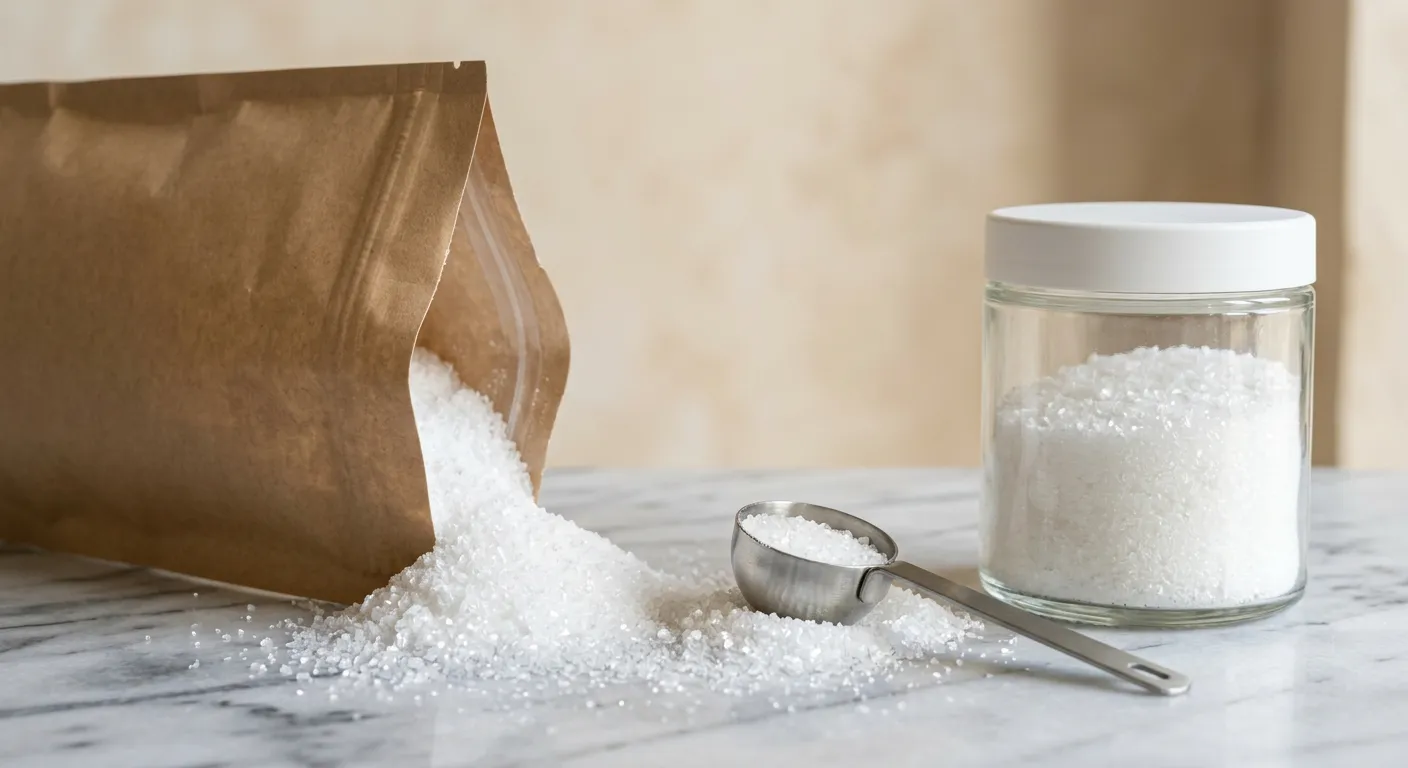
- Creapure is an ingredient brand: creatine monohydrate made in Germany, with a stated purity of at least 99.9%.
- It is the same molecule: at the same dose, Creapure and a high-quality creatine monohydrate deliver the same results and carry the same authorized claims.
- The real difference lies in batch-to-batch consistency and impurity control (creatinine, dicyandiamide, dihydrotriazine).
- A well-sourced regular creatine with a full certificate of analysis and incoming testing can reach a very high purity level.
- Irati Production manufactures your creatine in Saumur, France, with the raw material you select.
What is Creapure, exactly?
Creapure is not a special form of creatine. It is the trade name of a creatine monohydrate produced in Germany, at a dedicated plant in Bavaria. Its producer states a purity of at least 99.9% and a fully chemical synthesis process, with no animal or plant raw materials. The logo on the label acts as a quality signal for consumers.
Worth knowing: all creatine monohydrate sold in supplements is made by synthesis. There is no 'natural' creatine extracted from meat at industrial scale. Creapure and so-called regular creatine are therefore the same molecule. What sets them apart is the production site, process control and how thoroughly each batch is tested.
Creapure vs regular creatine: what really changes
Molecule
Creatine monohydrate · Creatine monohydrate
Origin
Germany, single site · Varies by supplier
Purity
At least 99.9% stated · Good to excellent depending on batch and supplier
Impurities
Published, regular testing · Check the certificate of analysis
Efficacy at the same dose
Identical · Identical
Raw material cost
Higher · Lower
Marketing value
Strong, recognized logo · Built on traceability
In practice, you cannot tell the difference in the shaker. It comes down to batch consistency and how much you can trust your raw material.

Efficacy: same molecule, same claims
The most common question is 'Is Creapure more effective?' No. At the same dose, a pure creatine monohydrate works the same way, logo or not. The health claims authorized in the European Union apply to creatine, not to an ingredient brand:
- creatine increases physical performance in successive bursts of short-term, high-intensity exercise, with the effect obtained at a daily intake of 3 g;
- in adults over 55, a daily intake of 3 g of creatine combined with resistance training can enhance the effect of that training on muscle strength.
For a brand, the choice of raw material does not change what you can say on the label. It changes what you can guarantee on quality. For dosing and how to present it, see our creatine daily dose guide.
The impurities to watch in creatine
Creatine synthesis can leave by-products behind. They are what separate a good raw material from a poor one:
- Creatinine: the breakdown product of creatine, with no benefit for the consumer. Its level also tells you how fresh the powder is and how it was stored.
- Dicyandiamide (DCD): a possible synthesis residue, to be kept as low as possible.
- Dihydrotriazine (DHT): another synthesis by-product to monitor.
- Heavy metals and contaminants: subject to EU regulatory limits, as with any supplement ingredient.
Independent tests published in recent years show wide gaps between suppliers. That is Creapure's main selling point. But a regular creatine bought from a qualified supplier, with a complete certificate of analysis and incoming testing, can also deliver excellent purity.
Why a brand chooses Creapure, or not
The answer depends on your positioning, your sales channels and your target retail price:
- Premium positioning: the Creapure logo is recognized by experienced lifters. It reassures buyers in gyms and specialty stores.
- Value pricing: a high-quality regular creatine monohydrate supports a friendlier price point with the same efficacy.
- Tested athletes: origin matters, but what truly reassures them is anti-doping testing of the finished product, batch by batch.
- Marketing use: the name and logo of a branded ingredient are governed by its producer. Check the conditions before printing them on your packaging.
Moisture and stability: an often overlooked point
A creatine that starts out very pure can lose part of its content if it is poorly stored or formulated. In contact with water and heat, creatine slowly converts to creatinine. As a dry powder, in a well-sealed tub or a stick pack, it stays very stable. In products that contain water, such as ready-to-drink beverages or gummies, the formula must be designed to protect it until the best-before date.
In other words, the raw material is only part of the equation. The manufacturing process, the packaging and the storage conditions matter just as much, so that the dose on the label is the dose the consumer gets, from the first day to the last.
How to present your creatine on the label
If you use Creapure, you can mention it in the ingredient list and on the pack, under the conditions set by its producer. If you use regular creatine monohydrate, lean on transparency: origin, tested purity, batch-by-batch control, made in France. Either way, the product name stays 'creatine monohydrate', and the only health claims available in Europe are those authorized for creatine.
What to check on the certificate of analysis
Whatever creatine you choose, request and read the certificate of analysis for every batch. Key points:
- creatine monohydrate content (assay);
- creatinine, dicyandiamide and dihydrotriazine levels;
- heavy metals and microbiology;
- particle size: a fine powder, often stated in 'mesh', disperses better in water;
- origin, batch number and production date, for traceability.
At our plant, every raw material is checked on receipt and traced through to the finished product, under our ISO 22000 certified food safety management system.
Selling creatine in the US and in Europe
If you sell on both sides of the Atlantic, keep in mind that labels and claims are not interchangeable. The EU creatine claims above must be used with their exact wording in Europe, while US labels follow FDA rules for dietary supplements, including the Supplement Facts panel and structure/function statements. A manufacturer used to both markets helps you build two compliant labels from one formula, without changing the raw material.
Making your creatine in France
We make creatine monohydrate as an unflavored or flavored powder, in tubs, doypacks or stick packs, as well as capsules and pectin gummies. You choose the raw material that fits your positioning; we verify its compliance, formulate and pack. Discover our creatine manufacturing offer.
Your creatine, made in France
Irati Production formulates and packs your creatine as white label or custom, with the raw material that fits your positioning.
- Creatine monohydrate as powder, stick packs, capsules or gummies
- Incoming raw material testing and batch traceability
- Claims and labeling reviewed by our regulatory team
- ISO 22000 and HACCP certified, FDA-registered site
- Small batches available on our standard formulas
Our answers on Creapure vs creatine monohydrate
Is Creapure more effective than regular creatine monohydrate?
No. Creapure is creatine monohydrate: at the same dose, efficacy is the same. The difference is consistent purity and impurity control.
Why is Creapure more expensive?
It is produced at a single site in Germany, with extensive quality control and a recognized brand. Those production and brand costs are reflected in the raw material price.
How can I tell if creatine is pure?
Read the batch certificate of analysis: creatine monohydrate content, creatinine, dicyandiamide and dihydrotriazine levels, and heavy metals. A serious manufacturer also tests every batch on receipt.
Is Creapure vegan?
Yes. Like all synthetic creatine monohydrate, it is made without animal raw materials.
How much creatine should I take, Creapure or not?
The European reference dose is 3 g per day, whatever the ingredient brand. That is the dose tied to the authorized health claims.
The information in this article is general. Each formula undergoes a technical and regulatory feasibility study.