Functional mushroom powder: the guide to launching your product
Mushroom coffee, adaptogenic lattes, Lion's Mane powders: functional mushrooms are one of the strongest trends in wellness. Here is how to choose them, formulate them and sell them compliantly.
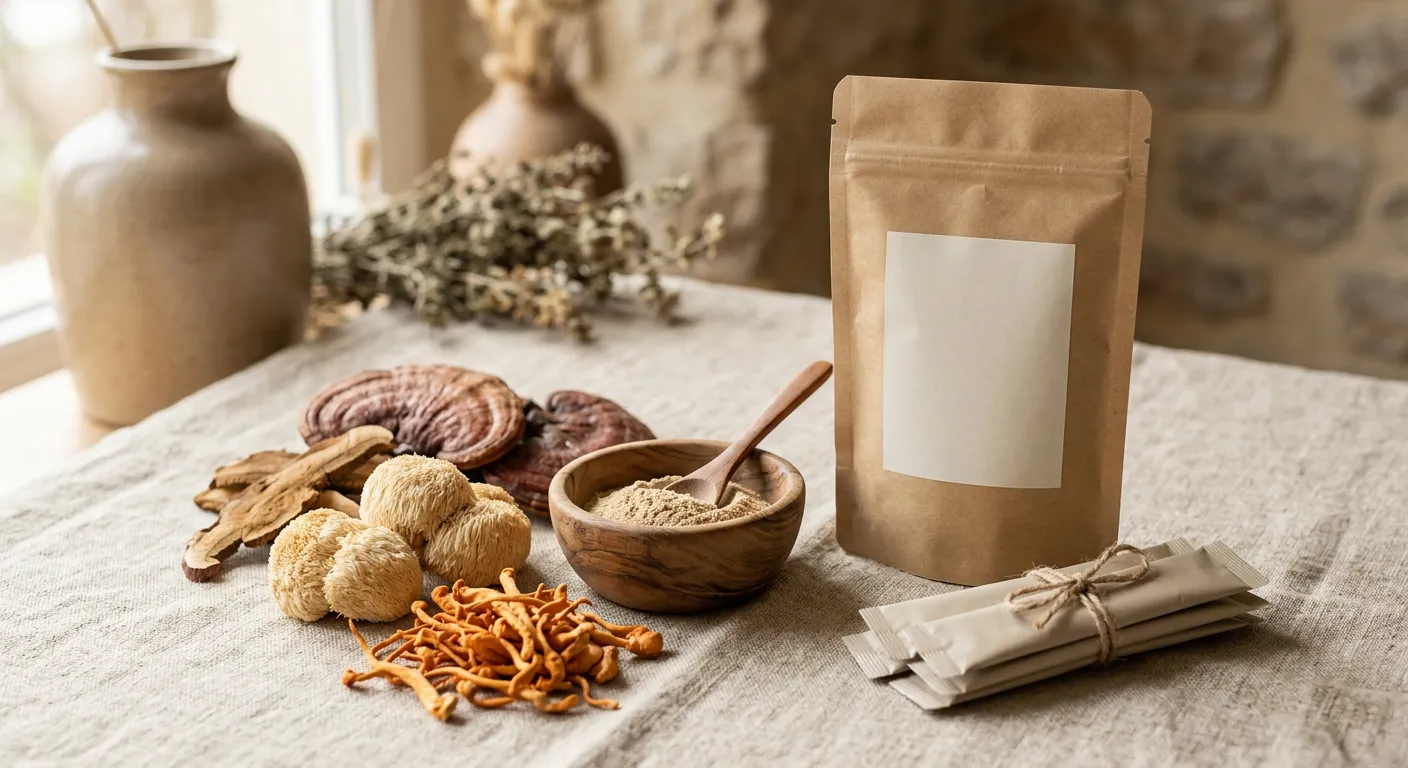
- The most requested functional mushrooms: Lion's Mane (Hericium), Reishi (Ganoderma), Cordyceps, Chaga, Shiitake, Maitake.
- EU status depends on the species and the part used: the fruiting body and its aqueous extracts are often authorised, while mycelium more often falls under novel food rules.
- No health claim is currently authorised for mushrooms: communication must be carefully controlled.
- Quality is judged on the extract: ratio, beta-glucan content, origin and testing (heavy metals, pesticides).
- Irati Production manufactures mushroom powders, mushroom coffee, lattes, capsules and gummies in France.
The star mushrooms of the market
- Lion's Mane (Hericium erinaceus): the concentration mushroom, widely used in “focus” products.
- Reishi (Ganoderma lucidum): positioned on relaxation and evening use.
- Cordyceps: associated with energy and sport.
- Chaga (Inonotus obliquus): rich in polyphenols, often used in drinks.
- Shiitake and Maitake: culinary mushrooms that are easy to incorporate.
Mushroom powder or extract: what is the difference?
A mushroom powder is simply the dried, ground mushroom. An extract is obtained by hot-water extraction (sometimes combined with alcohol extraction), which concentrates the compounds of interest, beta-glucans in particular. An extract is therefore more concentrated, but also more expensive.
To compare two raw materials, look at:
- the part used: fruiting body or mycelium;
- the extraction ratio (for example 10:1);
- the guaranteed beta-glucan content;
- origin and testing: heavy metals, pesticides, microbiology.
What EU regulations say
This is the point many brands overlook. In Europe, an ingredient that was not consumed to a significant degree before 1997 is a “novel food” and must be authorised before it can be sold. For mushrooms, the status depends on the species and the form:
Another key point: no health claim is currently authorised for mushrooms. You cannot state that a mushroom “improves memory” or “boosts immunity”. You can, however, add vitamins or minerals that carry their own claims, for example vitamin B12 for tiredness and fatigue or vitamin D for the immune system.
The formats that sell
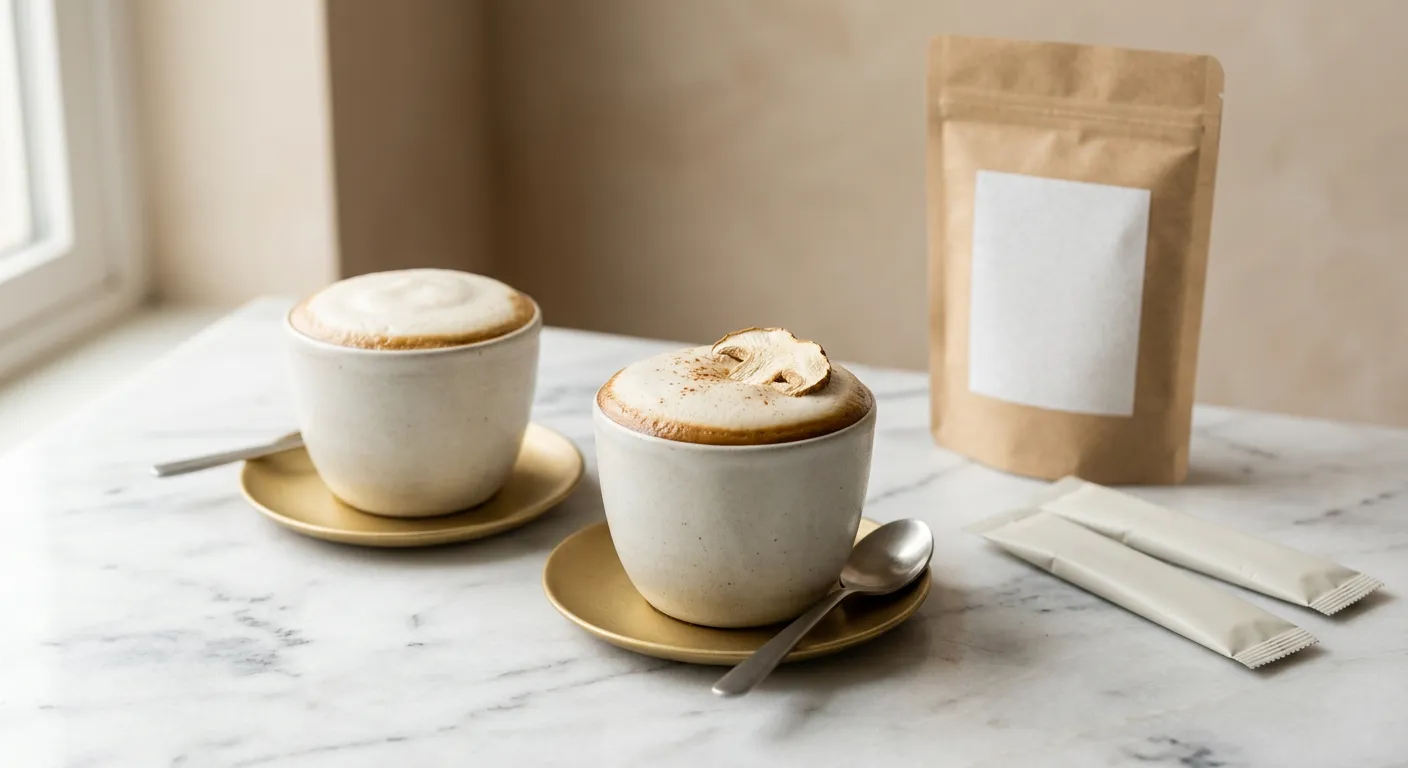
- Mushroom coffee: coffee + Lion's Mane + Chaga, to replace the morning coffee.
- Adaptogenic lattes: plant-based, cocoa or matcha base, with Reishi or Cordyceps.
- Pure powders in tubs or sticks, to add to smoothies.
- Capsules of standardised extracts.
- Mushroom gummies, for a wider audience.
Example of a compliant “Focus Coffee” formula
Launch your mushroom range
We source the extracts, check their regulatory status and manufacture your product in France.
- Mushroom coffee, lattes, powders, sticks, capsules, gummies
- Sourcing of standardised, fully tested extracts
- Novel food status check for every ingredient
- Taste and solubility development
- Compliant labelling and marketing claims
Frequently asked questions
Is Lion's Mane authorised in the EU?
Yes, as fruiting body or aqueous extract, neither of which is considered a novel food. Mycelium powder, on the other hand, falls under novel food status.
Can you say that Lion's Mane improves memory?
No. No health claim is currently authorised for mushrooms in Europe. You can, however, add vitamins or minerals that carry authorised claims.
What is the difference between mushroom powder and mushroom extract?
Powder is the dried, ground mushroom; an extract is concentrated by hot-water extraction and has a higher beta-glucan content.
What is mushroom coffee?
It is instant coffee enriched with functional mushrooms such as Lion's Mane or Chaga, often presented as an alternative to regular coffee.
Does Irati Production make private label mushroom coffee?
Yes. We manufacture mushroom coffee, lattes and mushroom powders for your brand. Request a quote.
This article is for information only and does not constitute medical or legal advice. Regulatory status as at 1 October 2026, to be checked case by case in the European Union Novel Food Catalogue. Source: Regulation (EU) 2015/2283 and the Novel Food Catalogue.