Mushroom Coffee: Lion's Mane, Reishi and Cordyceps Explained for Brands
Mushroom coffee has found its way into the morning routine of consumers looking for a different cup, often with less caffeine. Lion's mane, reishi, cordyceps, chaga: here is how mushroom coffee is made, what EU rules actually say and how to build an honest, successful product.
Contact us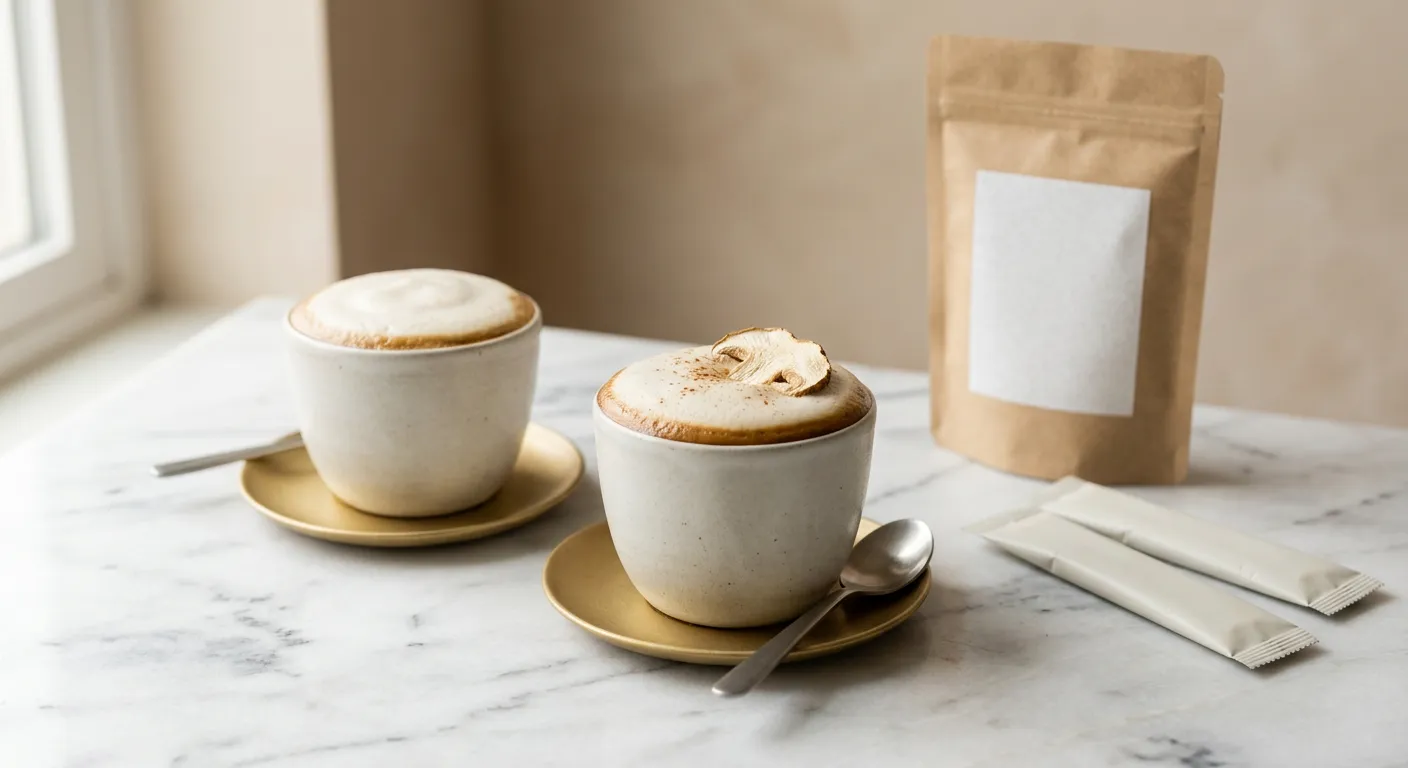
- Mushroom coffee blends coffee, usually instant, with mushroom extracts or powders such as lion's mane, reishi, cordyceps or chaga.
- Many recipes target less caffeine than regular coffee, with a smoother, earthier taste.
- There is currently no authorized EU health claim for these mushrooms, so messaging must stay careful.
- EU Novel Food status must be checked species by species and by the part used (fruiting body or mycelium).
- Irati Production manufactures mushroom coffee and functional drink powders in Saumur, France.
What is mushroom coffee?
Mushroom coffee is a drink that blends coffee with so-called functional mushrooms. Most often it is instant coffee mixed with dried mushroom extracts, dissolved in hot water or milk. There are also ground coffee versions, pods, and latte mixes to combine with plant milk and spices.
Mushroom coffee does not replace coffee with mushrooms; it changes the recipe. Consumers are looking for a different morning ritual, often with less caffeine and a softer, earthier taste.
Lion's mane, reishi, cordyceps, chaga: the main mushrooms
Lion's mane
Mild, slightly fruity · Focus, workday
Reishi
Bitter, woody · Afternoon, wind-down
Cordyceps
Subtle, slightly sweet · Sports, energy
Chaga
Woody, coffee-like · Flavor base, morning ritual
These positionings reflect traditional use and consumer expectations. They are not health claims and must not be presented as such on the label.
What EU regulations say
This is the point many brands discover too late. Three topics need checking:
- Novel Food status: an ingredient not consumed to a significant degree in the EU before May 1997 needs authorization before it can be sold. For mushrooms, status depends on the species and the part used: the fruiting body and the mycelium do not necessarily have the same status. The European Commission's Novel Food catalogue is the reference.
- Health claims: no health claim is currently authorized for lion's mane, reishi, cordyceps or chaga. Promises on memory, immunity or stress are therefore off the table. An authorized claim can, however, apply to a vitamin or mineral added to the formula.
- Caffeine: if the drink contains caffeine, labeling must reflect it, with the statements required depending on content and product form.
If you also sell in the US, mushroom coffee falls under FDA rules for foods or dietary supplements, with a different framework for ingredients and structure-function statements. A separate review is needed for each market.
Extract vs powder: a real difference
A mushroom powder is the dried, ground mushroom. An extract is obtained by extraction, often with hot water, sometimes with alcohol, then dried. Extracts are usually standardized for polysaccharides or beta-glucans, which ensures consistent composition from batch to batch. For a brand, a standardized extract is a stronger quality argument than a long list of mushrooms. Our functional mushroom powder guide covers these differences in detail.
Formulating a mushroom coffee that tastes good
- Coffee base: arabica, robusta or a blend, instant for convenience; coffee quality drives most of the taste.
- Mushroom content: enough to be credible without overpowering the coffee, especially with bitter reishi.
- Supporting ingredients: cocoa, cinnamon, chicory, coconut milk powder or sweeteners for a latte version.
- Solubility: extracts must disperse without clumps, which is tested in the lab before production.
Coffee, chicory or cocoa: the variants
Not every mushroom drink contains coffee. Chicory-based versions mimic coffee flavor without caffeine, cocoa-based versions focus on indulgence and evening use, and lattes combine mushrooms, spices and plant milk powder. This lets a brand build a small range around one family of extracts, with a morning product and an afternoon or evening product.
Mistakes to avoid
- Listing mushrooms without stating the amount or the type of extract: informed consumers notice.
- Promising effects on memory, stress or immunity: these claims are not authorized in the EU and expose the brand to enforcement.
- Neglecting taste: a mushroom coffee that is too bitter or earthy will not be reordered, whatever the quality of the extracts.
- Skipping contaminant testing: mushrooms, like all botanical raw materials, must be tested for heavy metals and microbiology.
Sourcing quality mushroom extracts
Quality starts with the raw material. Ask suppliers for the species and part used, the extraction method, the extract ratio, the standardization (polysaccharides or beta-glucans), and test results for heavy metals, microbiology and pesticides. Fruiting-body extracts and mycelium grown on grain are not equivalent: the latter can contain a significant share of the grain substrate. A clear specification sheet protects your brand and makes your label claims verifiable.
Who buys mushroom coffee?
Buyers are mostly younger, urban, digitally native consumers who want to cut back on coffee without giving up the ritual, plus wellness enthusiasts curious about functional ingredients. They discover products on social media, read reviews closely and expect honest labels. Subscription models work well because the product is used daily.
Tub, pouch or stick packs?
Mushroom coffee sells in tubs or stand-up pouches for daily use, and increasingly in single-serve stick packs for the office, travel and sampler boxes. The stick pack guarantees a consistent dose and protects aromas until opening.
Caffeine content: be transparent
Consumers buying mushroom coffee often want to manage their caffeine intake, so they expect to know how much is in each serving. Stating the caffeine per cup, offering a half-caf or caffeine-free version, and suggesting when to drink it all build trust. It is also a simple way to stand out in a category where many products stay vague. Clear labeling also helps retailers answer customer questions at the shelf.
A curiosity-driven market that rewards honesty
Mushroom coffee attracts younger, urban consumers who value rituals and natural products, but who are also wary of overblown promises. Successful brands focus on taste, transparency about the extracts used and sober messaging. It is also an excellent product to extend an existing supplement or beverage range.
Irati Production formulates and manufactures functional drink powders, including mushroom coffee, at its site in Saumur, France. See also our functional mushrooms page.

Your mushroom coffee, made in France
We develop and manufacture your mushroom coffee, from extract selection to packing.
- Standardized mushroom extract sourcing
- Flavor work: coffee, cocoa, spices, latte versions
- Ingredient status and claims checked
- Tubs, pouches or stick packs
- ISO 22000 and HACCP certified, FDA-registered site
Our answers on mushroom coffee
What is mushroom coffee?
Mushroom coffee is coffee, usually instant, blended with mushroom extracts or powders such as lion's mane, reishi, cordyceps or chaga. It is prepared like regular coffee, with hot water or milk.
Does mushroom coffee have caffeine?
Yes, if it contains coffee. Many recipes contain less caffeine than a regular cup, and caffeine-free versions based on chicory or cocoa also exist.
Does mushroom coffee taste like mushrooms?
Not in a well-formulated recipe. It tastes like coffee, often smoother and slightly earthy; reishi can add a touch of bitterness.
Can a brand make health claims for lion's mane or reishi in the EU?
No. No health claim is currently authorized in the EU for these mushrooms; only authorized claims for added vitamins or minerals can be used.
Is lion's mane a Novel Food in the EU?
Status depends on the part of the mushroom used and its history of consumption. It must be checked in the European Commission's Novel Food catalogue for each ingredient.
The information in this article is general and does not constitute health claims. Each formula undergoes a technical and regulatory feasibility study.