Healthy life expectancy: what food supplements can and cannot do
Living longer is no longer the whole story: what counts is the number of years lived without disability. French official data show a clear gap between the two, and healthy-ageing ranges sit right in that gap. Here are the figures, what a supplement label is allowed to claim, and the formats Irati Production manufactures for these ranges.
Contact us
- In 2024 in France, a 65-year-old woman can expect to live 23.6 more years, 11.8 of them without disability; a man 19.9 years, 10.5 of them without disability (DREES).
- Since 2008, disability-free life expectancy at 65 has gained 1 year and 9 months, but only 4 months for women and 1 month for men since 2019.
- No food supplement may claim to extend life: Regulation (EC) No 1924/2006 only authorises claims on specific functions.
- Claims that matter for senior ranges cover bones, muscles, fatigue, immunity and cognitive function: vitamin D, calcium, protein, vitamin B12, zinc.
- Irati Production manufactures these formulas as capsules, tablets including chewables, powders and pectin-based gummies in Saumur, France.
Two figures not to confuse
Life expectancy is the number of years a person can expect to live. Disability-free life expectancy, published every year by the French statistics service DREES, only counts the years lived without limitation in daily activities. In 2024, at birth, it reached 64.1 years for women and 63.7 years for men.
At 65 the gap becomes telling: of the 23.6 years a woman has left on average, 11.8 are lived without disability, half of them. For a man, it is 10.5 years out of 19.9, or 53%. Women live longer, but not proportionally longer in good health.
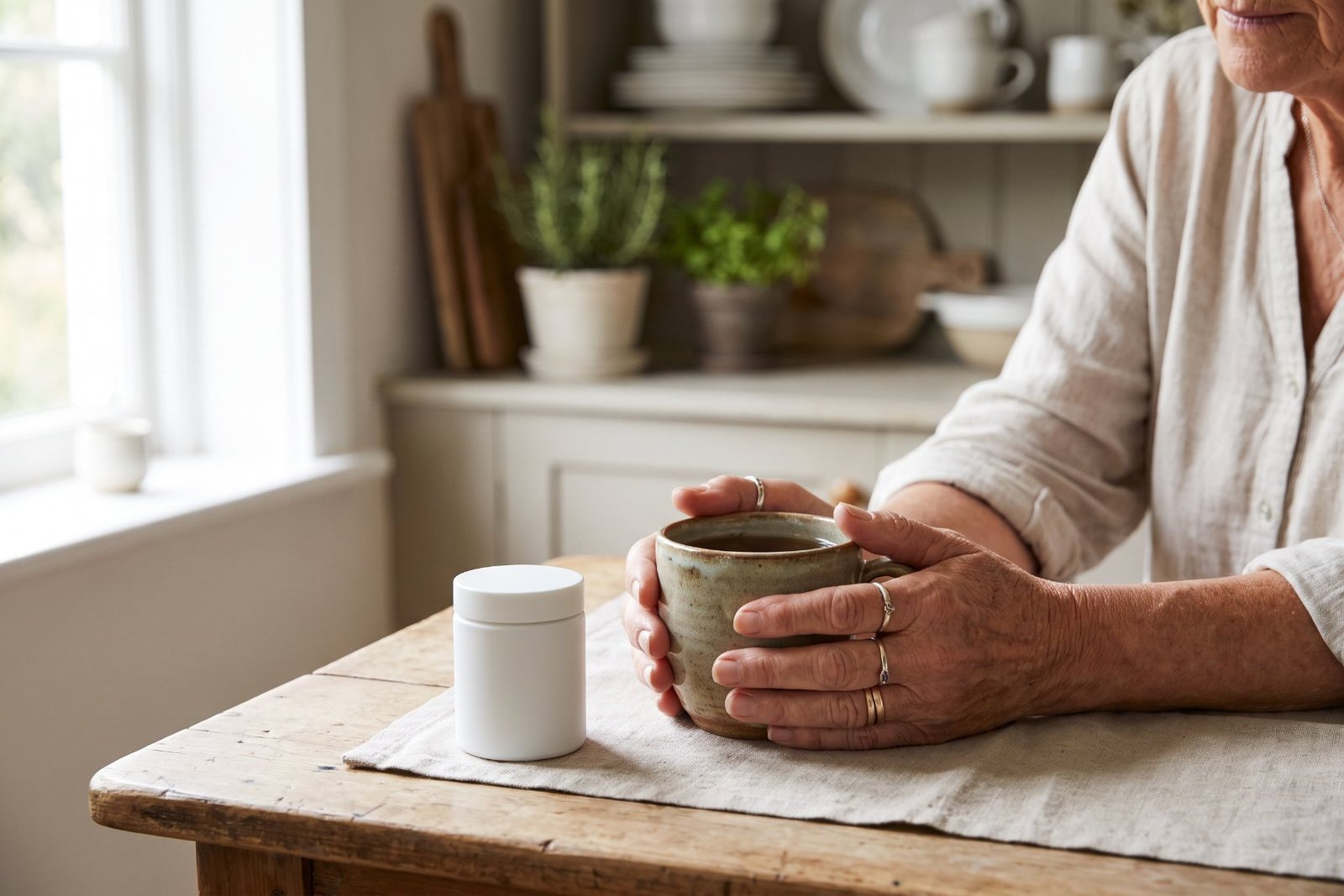
Progress is slowing
Between 2008 and 2024, disability-free life expectancy at 65 rose by one year and nine months for both sexes. The share of remaining years lived without disability went from 45% to 50% for women and from 48% to 53% for men. Since 2019, however, the indicator has stalled: four months gained for women, one month for men.
France still ranks well in Europe: in 2023 it was third of the 27 EU countries for women's disability-free life expectancy at 65, and seventh for men. Healthy ageing is a long-term market driven by demographics, and one where honest promises make the difference.
What the label can say
No authorised claim mentions longevity, slower ageing or years gained. Regulation (EU) No 432/2012 does list precise claims, usable once the daily portion provides at least 15% of the nutrient reference values. The most useful for senior ranges:
- Vitamin D: contributes to the maintenance of normal bones, normal muscle function and the normal function of the immune system.
- Calcium: is needed for the maintenance of normal bones.
- Protein: contributes to the maintenance of muscle mass and normal bones, if the food is at least a source of protein.
- Vitamin B12: contributes to the reduction of tiredness and fatigue and to the normal functioning of the nervous system.
- Zinc: contributes to normal cognitive function and to the protection of cells from oxidative stress.
- Omega-3 DHA: contributes to the maintenance of normal brain function, from 250 mg of DHA per day.
The studies to know
Clinical trials on healthy ageing measure functions, not lifespan. The largest, VITAL, followed 25,871 US adults for a median of 5.3 years on 2,000 IU of vitamin D per day: no reduction in cancer or cardiovascular events in the general population (Manson et al., NEJM 2019). A brand should sell what the claim says, and nothing more.
For muscle mass, the PROT-AGE group recommends 1.0 to 1.2 g of protein per kilo per day after 65, above the 0.8 g advised for younger adults (Bauer et al., J Am Med Dir Assoc 2013). This is the scientific basis of protein powders and chewable tablets for seniors.
The formats seniors expect
With age, swallowing a large capsule becomes a chore. Brands that succeed with this audience offer chewable tablets, powders to stir into yoghurt or a drink, pectin-based gummies and small capsules. We manufacture all four forms in Saumur, with easy-open packaging: jars, resealable doypacks, pill bottles. See our guide to chewable tablets and our capsule manufacturing.
Sources
DREES, Études et Résultats No 1363, January 2026. Manson JE et al., N Engl J Med 2019;380:33-44. Bauer J et al., J Am Med Dir Assoc 2013;14:542-559. Regulation (EU) No 432/2012.
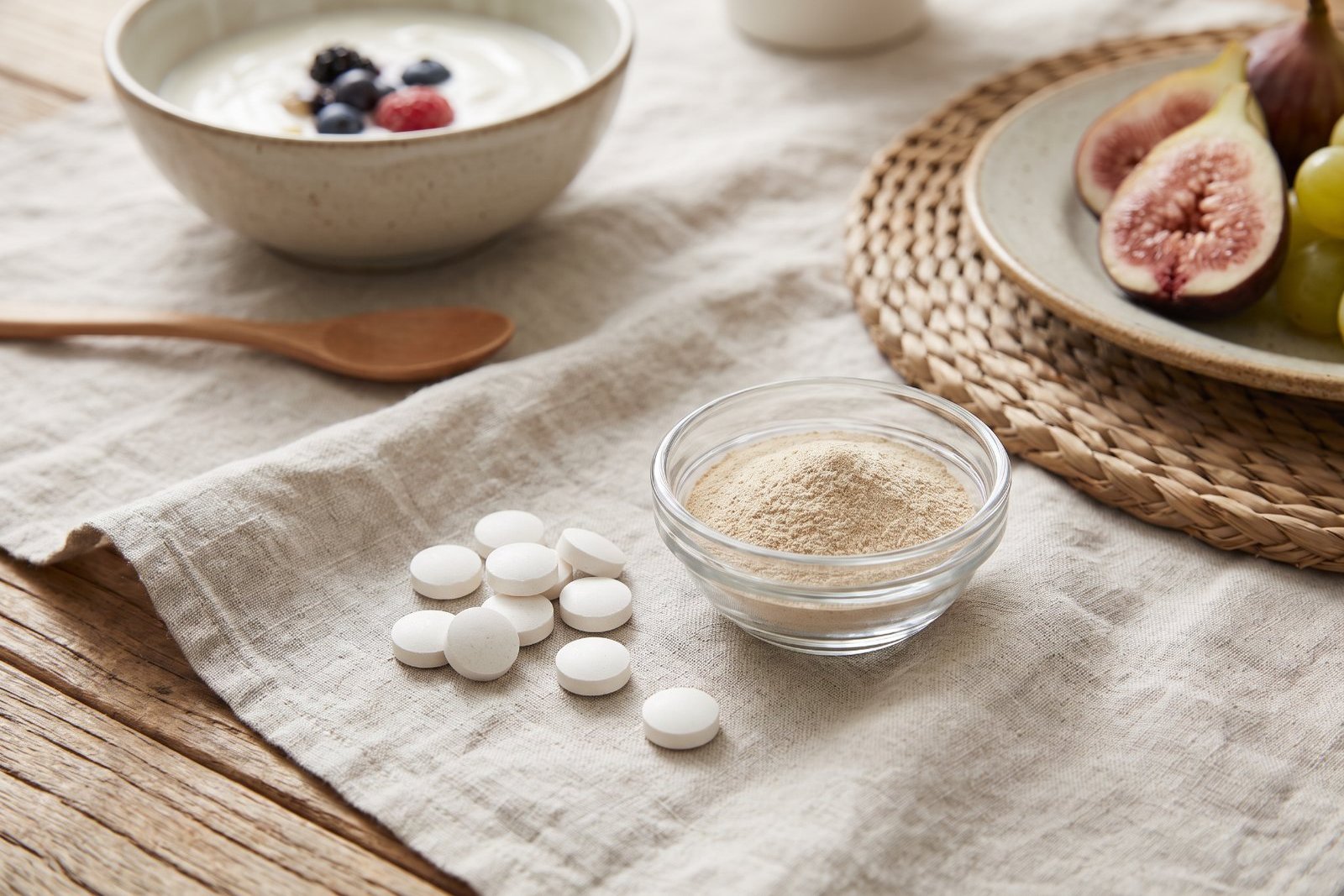
A healthy ageing range, manufactured in Saumur
Irati Production manufactures senior formulas as capsules, tablets including chewables, powders and pectin-based gummies, on an ISO 22000 certified, HACCP-based, FDA-registered site.
- Vitamin D, calcium, protein, vitamin B12, zinc, omega-3
- Chewable tablets and powders for people who dislike capsules
- Jars, resealable doypacks and easy-open pill bottles
- Claims checked by our regulatory team
- Standard formulas or custom development
Our answers on supplements and healthy life expectancy
What is disability-free life expectancy?
It is the number of years a person can expect to live without limitation in daily activities. In France in 2024, at 65, it was 11.8 years for women and 10.5 years for men (DREES).
Can a food supplement extend life?
No. No authorised EU claim relates to longevity. A supplement can contribute to specific functions, such as the maintenance of normal bones with vitamin D and calcium, or the reduction of tiredness with vitamin B12.
Which claims suit a senior range?
The most used are those for vitamin D (bones, muscles, immunity), calcium (bones), protein (muscle mass), vitamin B12 (fatigue, nervous system), zinc (cognitive function) and DHA (brain function, from 250 mg a day).
Which format is best for seniors?
Chewable tablets, powders and pectin-based gummies avoid swallowing a large capsule. Irati Production manufactures these forms, as well as size 1 capsules that are easier to swallow.
Can a supplement be labelled anti-ageing?
Not as a health promise. The label must stick to authorised claims and their conditions of use. Our regulatory team checks every statement before printing.
Who manufactures private label senior supplements?
Irati Production manufactures food supplements and functional powdered drinks for brands in Saumur, France: capsules, tablets, powders and pectin-based gummies, as standard or custom formulas.
The information in this article is general and does not constitute regulatory advice. Each formula undergoes a technical and regulatory feasibility study.