White label gummies: 8 questions to ask your manufacturer before launching
Launching white label gummies looks simple: a formula already exists, you just add your brand. In practice, the gelling base, the quantities available, the sugar content, the packaging, the lead times and the regulations all decide what happens once you go into production. Here are the 8 questions our R&D team recommends asking any white label gummies manufacturer before choosing a partner.
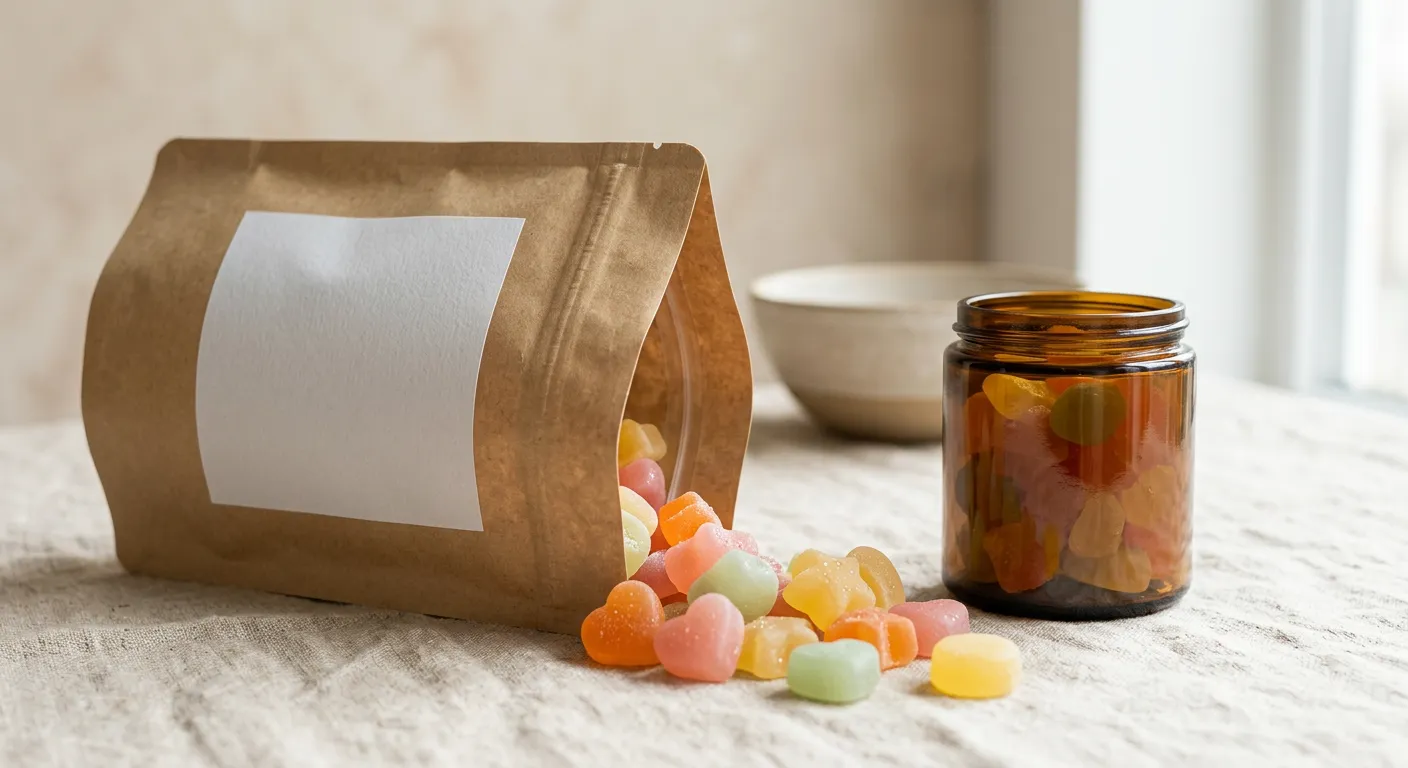
- A white label gummy uses the manufacturer’s standard formula: you choose the brand, the label and the container.
- Irati Production only makes pectin-based gummies, with no gelatin, at its factory in Saumur, France.
- Small batches are available on standard formulas; a custom formula sets its quantities according to the development.
- Lead times published by Irati Production: production in 4 to 6 weeks; a 3 to 4 week bench trial for a custom formula.
- In the EU, gummy labels must comply with Regulation (EC) No 1924/2006 on claims and Regulation (EU) No 1169/2011 on food information.
White label gummies manufacturer: why the questions matter more than the catalogue
When a brand looks for a gummies manufacturer in Europe, it usually compares catalogues of formulas. A catalogue tells you what exists. It does not tell you what will happen when your product is on the production line, in a jar on a warehouse shelf or in a customer’s letterbox in mid-summer. The 8 questions below help you find out before you commit. They apply to any gummy contract manufacturer, and we answer them for Irati Production.
Questions 1 and 2: which base, and which formula?
1. Is the gummy pectin-based or gelatin-based?
This is the first decision, because it shapes your target consumers. Gelatin, of animal origin, gives an elastic chew but does not suit vegetarian diets or consumers who avoid pork or beef products. Pectin, extracted from fruit, gives a softer bite and a gel that holds up better in heat. At Irati Production, every gummy is pectin-based, with no gelatin. For texture and stability differences, read our comparison of pectin vs gelatin gummies.
2. Standard white label formula or custom formula?
White label relies on a formula the manufacturer has already developed and produced: actives, dosages, flavour and colour are set. You customise the name, the label and the container. A custom formula starts from your specification and goes through a development phase. The table sums up the differences.
Many brands combine both: they start with two or three standard formulas to prove their sales, then develop an exclusive recipe for their best seller. Our guide to white label vs custom supplements goes into more detail.
Questions 3 and 4: what quantities, and how much sugar?
3. Can you start with a small batch?
Ask the question for each type of formula, because the answer differs. At Irati Production, small batches are offered on standard white label formulas: the recipe is already industrialised, so you can place a first order without tying up too much stock. A custom formula needs line settings and specific raw material purchases, so its minimum quantity is set once development is complete.
4. Can the gummy have no added sugars?
A classic gummy contains a significant share of sugars, which more and more consumers object to. A no-added-sugar version replaces sugar with polyols and fibres, which changes the texture and the cooking process. Check the label too: in the EU, “sugar-free” and “no added sugars” are two distinct nutrition claims under Regulation (EC) No 1924/2006, sweeteners require the statement “with sweetener(s)”, and above 10% added polyols the label must warn that excessive consumption may have laxative effects.

Questions 5 and 6: which packaging, and what are the real lead times?
5. Jar or doypack?
Gummies are sensitive to moisture and heat, so the container protects the product as much as it presents it. A jar reassures buyers in pharmacies and shops. A doypack is lighter and cheaper to ship and store, which suits e-commerce. Ask whether the manufacturer packs in-house and on which lines. Irati Production runs 2 jar lines and 2 doypack lines at its Saumur factory, so the gummy goes from manufacturing to packing on the same site.
6. What are the lead times, step by step?
A single overall lead time without detail will not let you plan a launch. Ask for each step. For a custom formula at Irati Production, allow 1 week for the recipe and 2 weeks for costing, then 3 to 4 weeks for the bench trial, which is a paid service. Production then takes 4 to 6 weeks. With a standard formula, you go straight to production. On your side, add the time needed to design and print the label, a step often missing from launch plans.
Question 7: will your actives hold up in a gummy?
Gummies are a demanding format. The mass is cooked then deposited, the matrix contains water and is acidic, and the product must keep its active content until its best-before date. Some vitamins degrade with heat or light, some minerals and plant extracts have a taste that is hard to mask, and the amount of active per gummy is limited, which may mean recommending several gummies a day.
Three questions to ask: which analyses are carried out on the finished product, how stability is monitored over time, and how many gummies will be needed to reach the intended dose. A serious manufacturer will also tell you when an active is better suited to a capsule, a tablet or a powder.
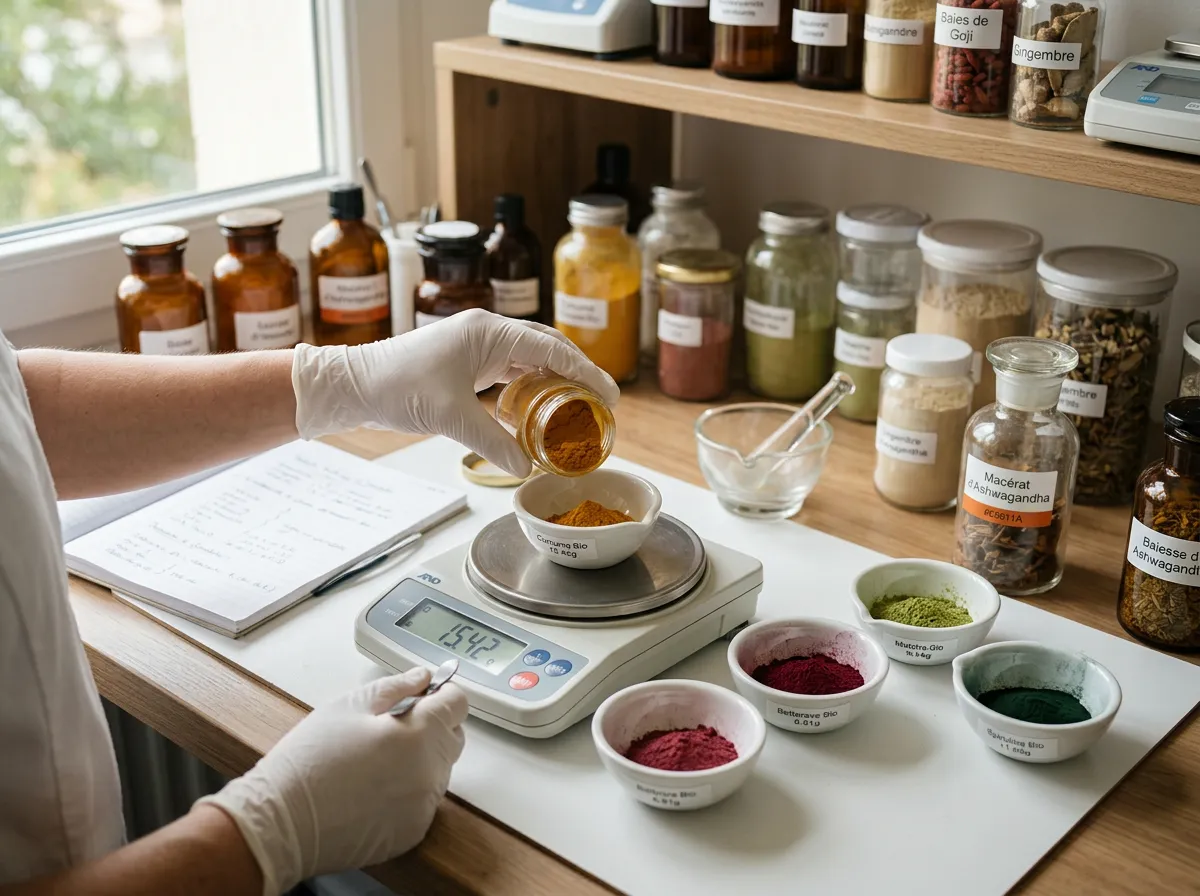
Question 8: who handles regulations, storage and shipping?
Regulations. In France, a food supplement must be notified to the DGCCRF before it is first placed on the market, under Decree No 2006-352. Only health claims listed in the EU register, used under their conditions of use, may appear on the label (Regulation (EU) No 432/2012). With white label, your brand places the product on the market, so check what the manufacturer takes care of. Irati Production offers regulatory support as a service (claims and labelling review) as well as Cologne List registration for products aimed at athletes.
Storage and shipping. Once production is complete, the goods must be stored and shipped. Irati Production offers storage and logistics at its 1,500 m² site in Allonnes, with direct shipping to your end customers if needed. The stock remains your property.
Advice from our R&D team
The mistake we see most often: trying to pack too many actives into a single gummy. An overloaded formula means several gummies a day, a weaker taste and harder stability. One clear benefit, carried by well-dosed actives, works better than an impressive ingredient list.
What takes the most know-how in a gummy are actives sensitive to heat and moisture, and ingredients with a strong taste, such as some minerals or plant extracts. Our advice for a first range: start with a standard formula to test your market, then develop an exclusive recipe for your best-selling product.
Your white label gummies with Irati Production
Irati Production is a French food supplement manufacturer working in white label and custom formulation, based in Saumur for more than 10 years. We make your pectin-based gummies and pack them on site, from small batches on standard formulas to a formula developed for your brand.
- Pectin-based gummies, no gelatin, with or without added sugars
- 2 gummy lines, 2 jar lines and 2 doypack lines in Saumur
- ISO 22000 and HACCP certified site, FDA registered
- Regulatory support, storage in Allonnes and shipping to your customers
Your questions about white label gummies
What is a white label gummy?
A white label gummy is a food supplement made from a manufacturer’s standard formula and sold by a brand under its own name and label. At Irati Production, these standard formulas are pectin-based gummies made in Saumur, France.
Can you launch white label gummies with a small batch?
Yes, on standard formulas. Irati Production accepts small batches on its standard white label formulas. For a custom formula, the minimum quantity is set once development is complete.
Do Irati Production gummies contain gelatin?
No. Irati Production only makes pectin-based gummies, using a gelling agent extracted from fruit. They suit consumers who avoid animal gelatin.
How long does it take to make white label gummies?
At Irati Production, production takes 4 to 6 weeks. For a custom formula, add 1 week for the recipe, 2 weeks for costing and 3 to 4 weeks for a bench trial, which is a paid service.
Who is responsible for the label of a white label gummy?
The brand placing the product on the market is responsible for its label and claims. Irati Production offers a claims and labelling review service to secure the launch.
Sources: Regulation (EC) No 1924/2006 (nutrition and health claims), Regulation (EU) No 432/2012 (list of permitted health claims), Regulation (EU) No 1169/2011, Annex III (“with sweetener(s)” statement and laxative warning above 10% added polyols), French Decree No 2006-352 of 20 March 2006 on food supplements. Irati Production data: internal capacities and lead times. This information is general and does not replace a regulatory review of your product.